33 moves
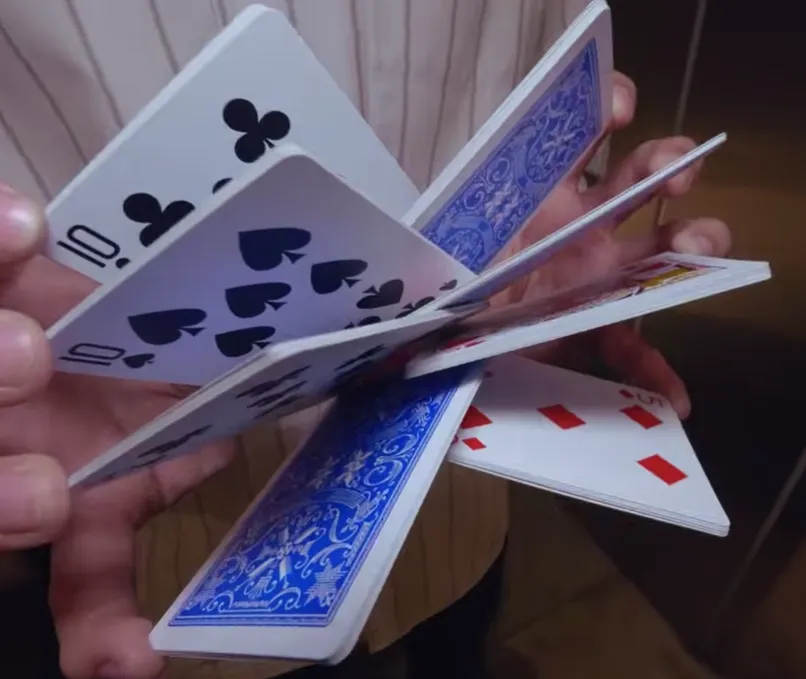
8 Packet moves that invlolves faced up and down packets
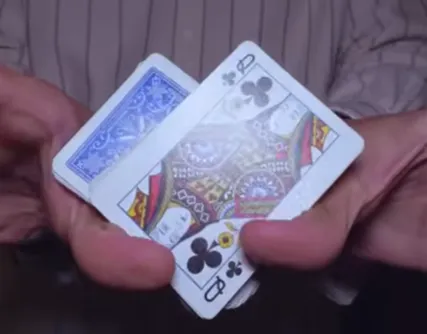
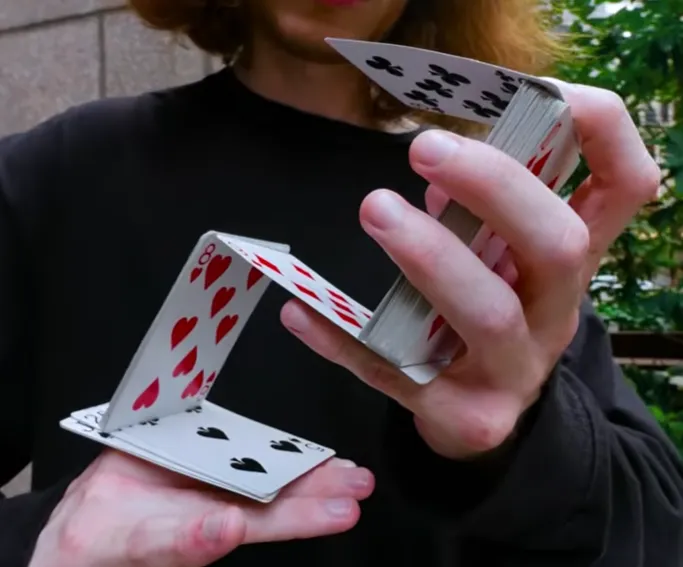
5 packet cut shown in the cardistry video Full Hose that resembles they number "5"

Leap of Faith is a two handed packet cut that ends with a packet being tossed, or "leaping", into the deck.
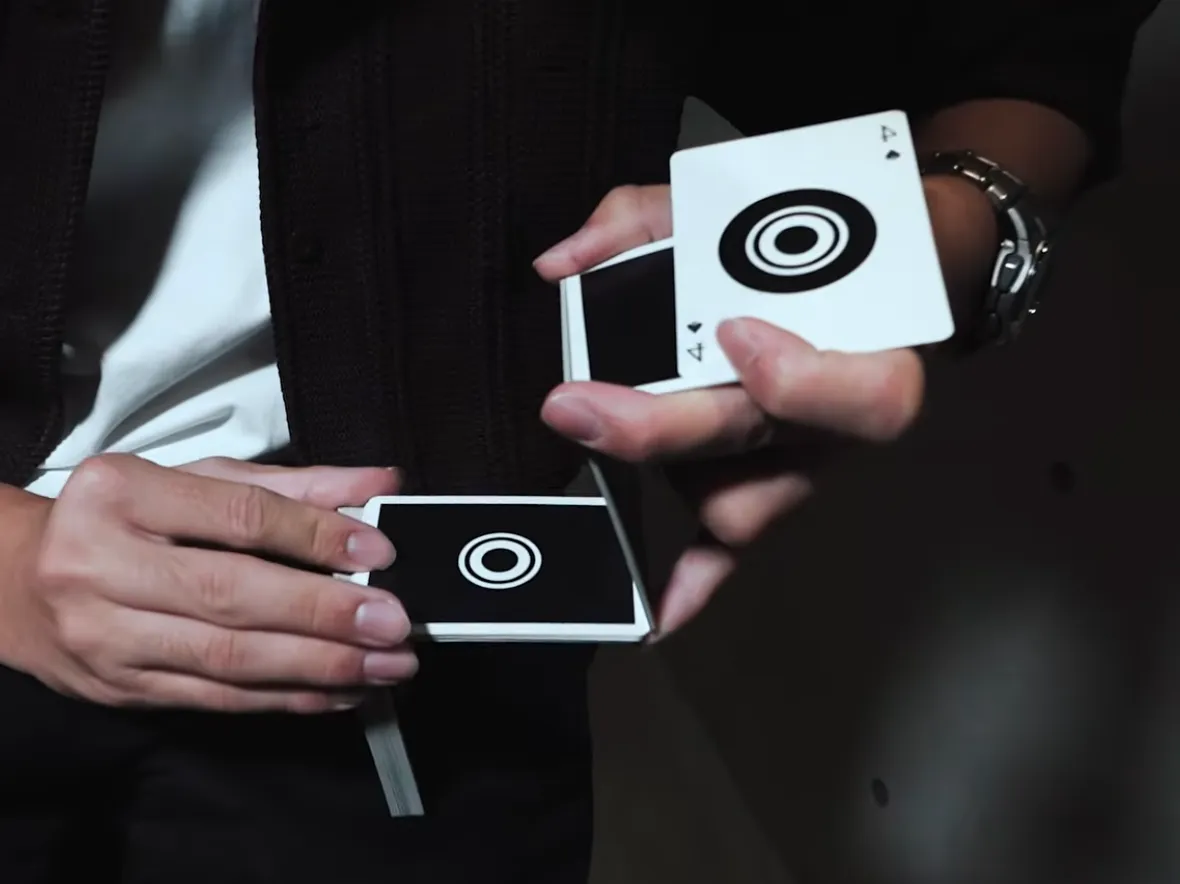
Archimedian Screw by Hyogo is a move where the deck is split into 4 packets, with a singular card ontop of the top packet. The packets are then rotated around until the singular card drops back into the deck.
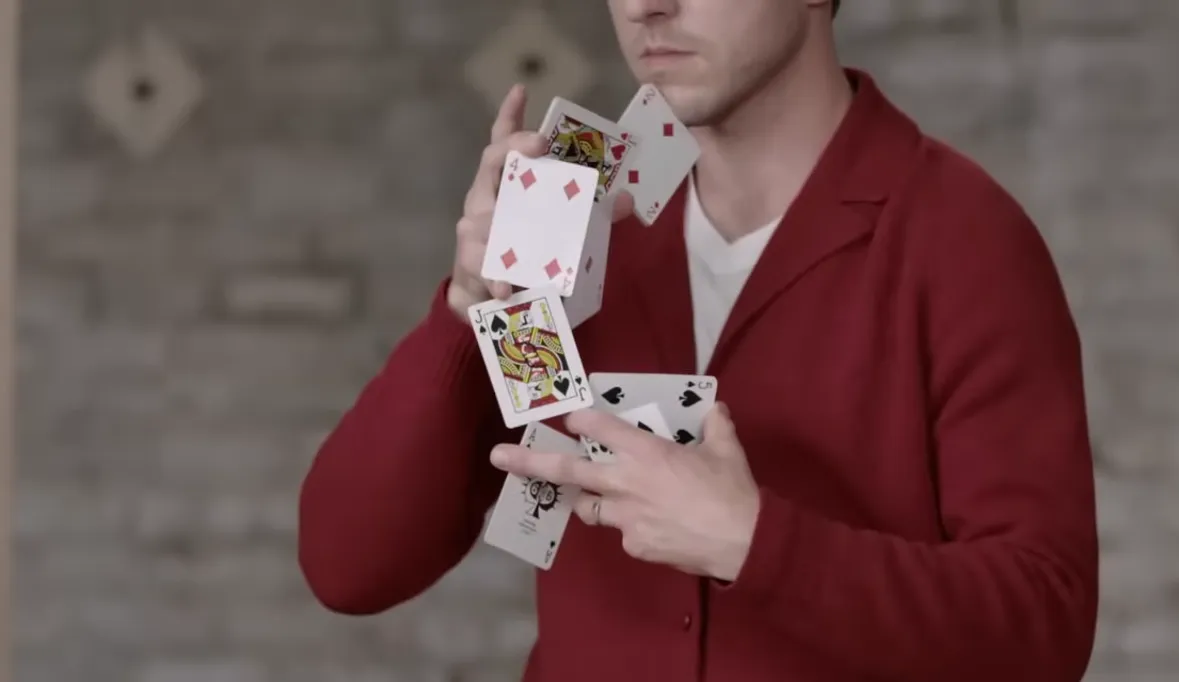
The Leno Cut is a 2H packet cut known for having a grandiose 8 packet display that uses the chin, and actually being the one to popularize using othet body parts aside from the hands in moves
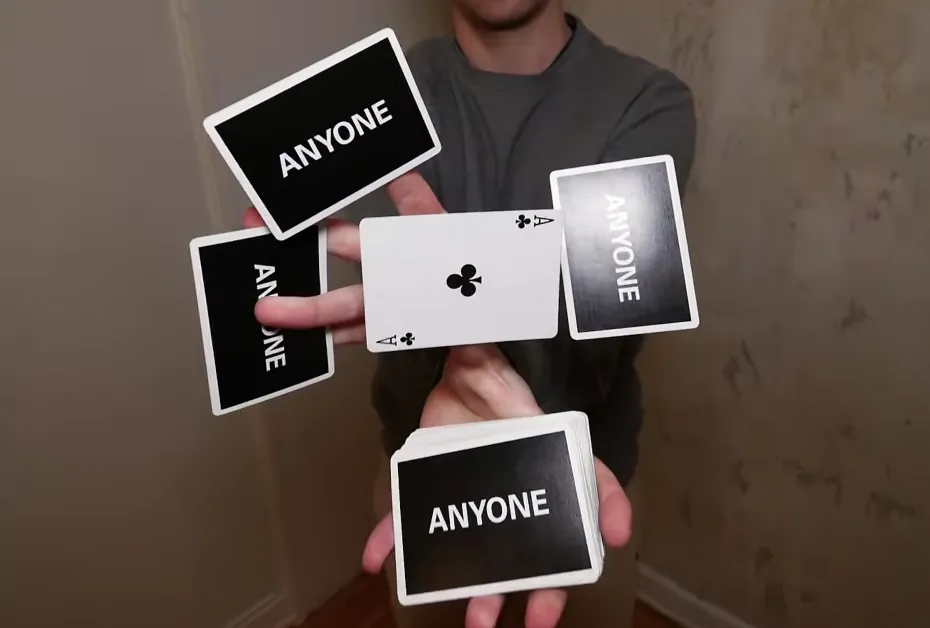
Spatium (aka Spatchum) is a 3-phase isolation reminiscent of Phobos Deimos, despite being created before Phobos Deimos. Noel Heath once said in an interview that Spatium was one of the first moves he created alongside Virus. The two names of Spatium came from how the two tutorials referred to it with different names, specifically the cardistry high tutorial referred to it as Spatchum, but in the newer A1 demonstration, it was called Spatium. Tips Spatium uses a large amount of angels in the move, and with all of them being done very quickly with no room to breathe. It's recommended for beginners to find a way to make the tips of both of your thumbs and your index as sticky as possible. Some practices involve licking and then drying those fingers; however, this is not an advised approach, especially once the trick has been mastered.

Kroma Cut is a basic one handed cut created by Jano Slap. The move itself strips off two packets from the main deck, and then rotates the packet to put it back in line with the deck.
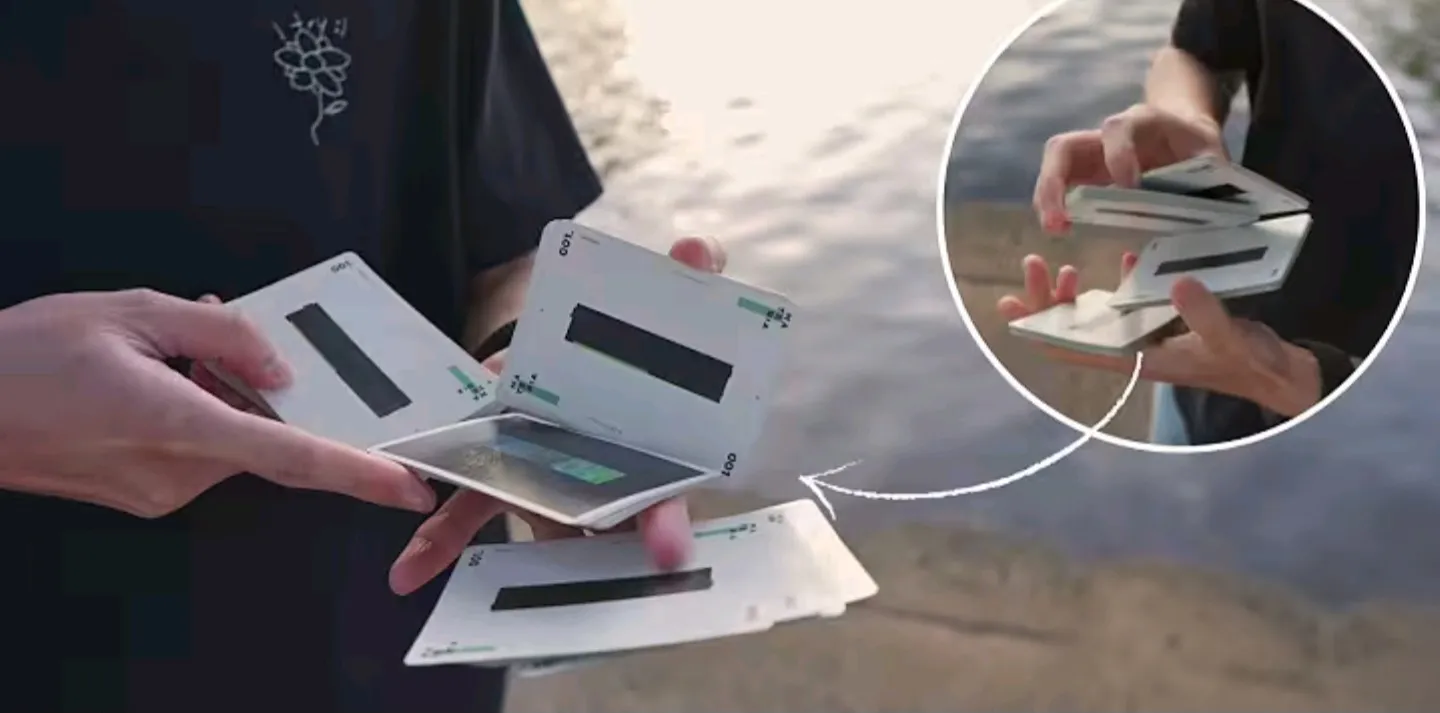
A move with an almost dreamy, half-surreal vibe. The move follows simpler mechanics that then lead into more complicated sequence. Backstory Both Cornobble and Are There Turtles in the pond share a common opener, with Cornobble generally understood to have been developed after Turtles in the Pond. The shared opener is based on Revolver by Kevin Ho. According to Cardistree, work on this opener began around spring 2024, and the first fully completed version of Are There Turtles in the Pond—the precursor to Cornobble—was finished in June 2024. The names Are There Turtles in the Pond and Cornobble originate from a Youtube video A (non)cardist's deck collection. In that video, Cardistree asks a friend what the flourish should be called. She jokingly suggested "Are There Turtles in the Pond", a phrase Cardistree describes as "a running joke between them". In the same video, she also proposed "Cornobble", a term meaning to slap someone across the face with a dead fish. Cardistree explains that he spent some time deciding between the two names. Eventually, around October 2025, he chose to use both. At that time, what is now Are There Turtles in the Pond was originally named Cornobble. However, after realizing the name didn’t suit the move, he redesigned Are There Turtles in the Pond to include a “slap‑like” closer that better matched the meaning of the word cornobble. Tutorials for both Are There Turtles in the Pond and Cornobble were released around March 2026. important: the tutorial teaches both cornobble and its variation turtles in the pond
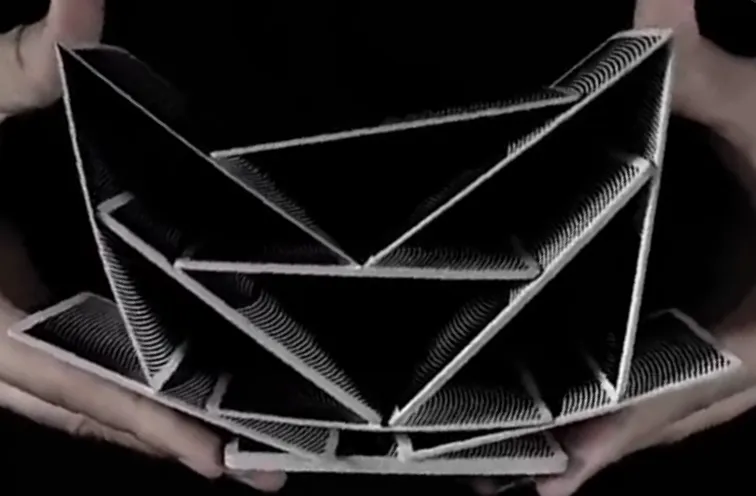
Array is a stately card construction built using principles similar to those of Holy Grail. Blocks of cards are pushed out from the deck and then pushed back into it. The entire structure is raised to a spectacular level through the thumbs and its final form is achieved by releasing the fingers holding the lower packets.
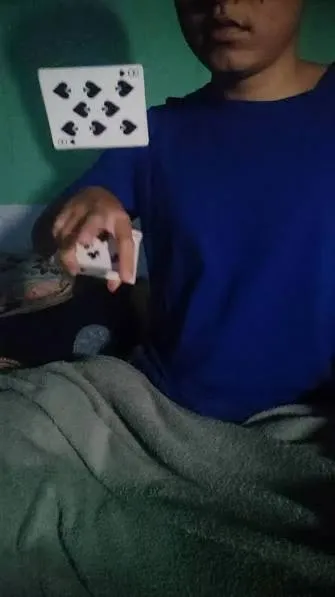
The Cobrush Cut is a combination of Cobra Cut by De'Vo Vom Schattenreich and Brush by Jerry Cestkowski. It has the same cobra-like striking motion, but with the packet also being spun midiar.

