12 moves

Kroma Cut is a basic one handed cut created by Jano Slap. The move itself strips off two packets from the main deck, and then rotates the packet to put it back in line with the deck.
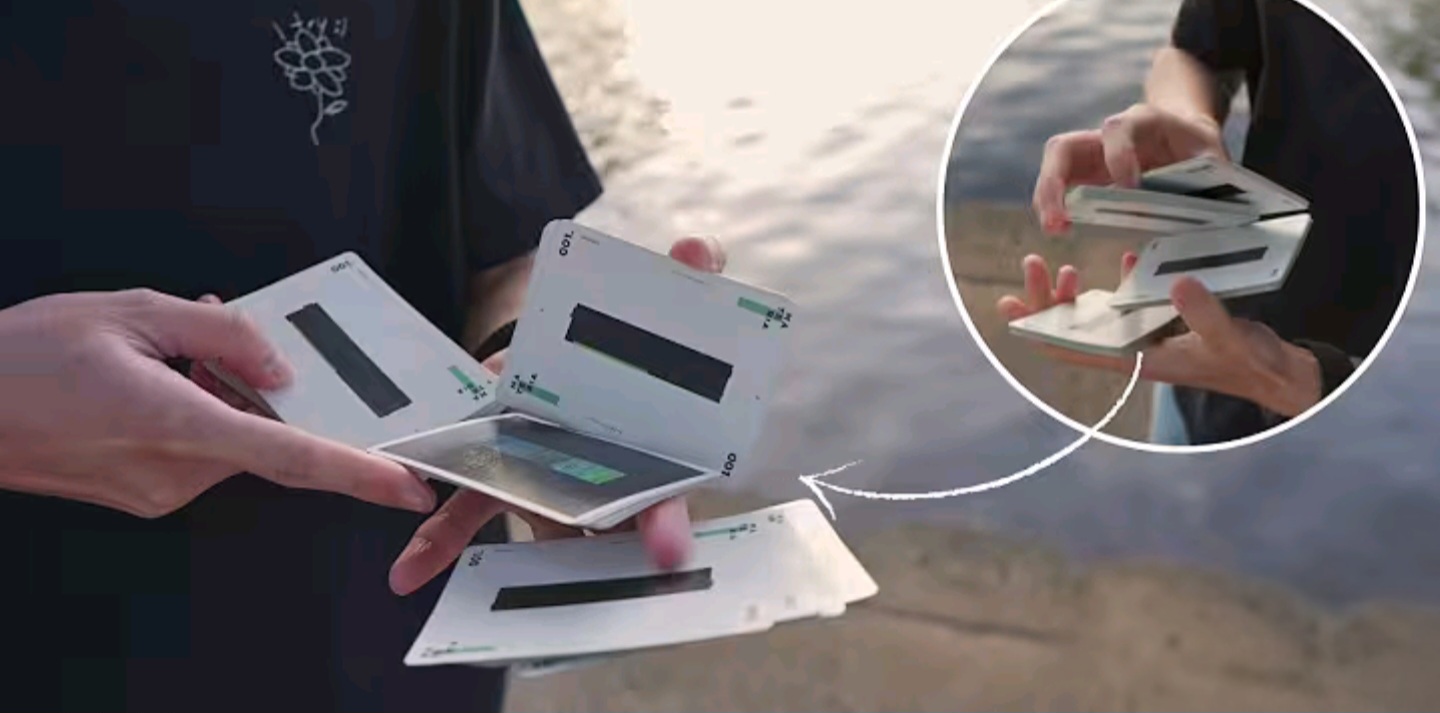
A move with an almost dreamy, half-surreal vibe. The move follows simpler mechanics that then lead into more complicated sequence. Backstory Both Cornobble and Are There Turtles in the pond share a common opener, with Cornobble generally understood to have been developed after Turtles in the Pond. The shared opener is based on Revolver by Kevin Ho. According to Cardistree, work on this opener began around spring 2024, and the first fully completed version of Are There Turtles in the Pond—the precursor to Cornobble—was finished in June 2024. The names Are There Turtles in the Pond and Cornobble originate from a Youtube video A (non)cardist's deck collection. In that video, Cardistree asks a friend what the flourish should be called. She jokingly suggested "Are There Turtles in the Pond", a phrase Cardistree describes as "a running joke between them". In the same video, she also proposed "Cornobble", a term meaning to slap someone across the face with a dead fish. Cardistree explains that he spent some time deciding between the two names. Eventually, around October 2025, he chose to use both. At that time, what is now Are There Turtles in the Pond was originally named Cornobble. However, after realizing the name didn’t suit the move, he redesigned Are There Turtles in the Pond to include a “slap‑like” closer that better matched the meaning of the word cornobble. Tutorials for both Are There Turtles in the Pond and Cornobble were released around March 2026. important: the tutorial teaches both cornobble and its variation turtles in the pond
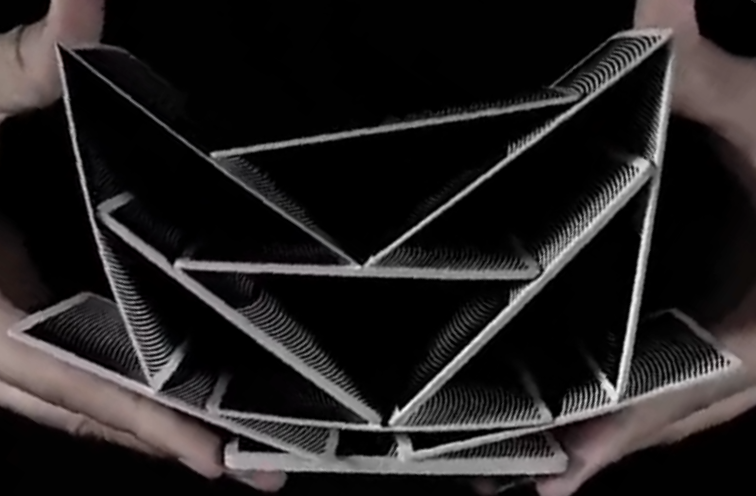
Array is a stately card construction built using principles similar to those of Holy Grail. Blocks of cards are pushed out from the deck and then pushed back into it. The entire structure is raised to a spectacular level through the thumbs and its final form is achieved by releasing the fingers holding the lower packets.
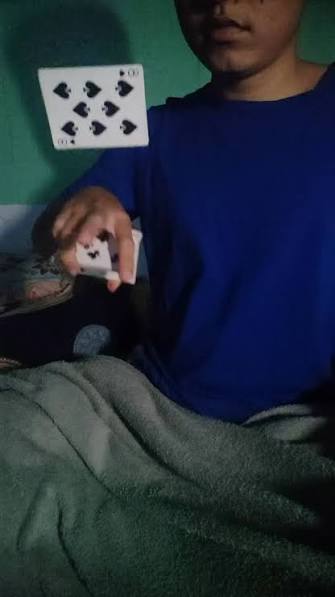
The Cobrush Cut is a combination of Cobra Cut by De'Vo Vom Schattenreich and Brush by Jerry Cestkowski. It has the same cobra-like striking motion, but with the packet also being spun midiar.

Cobra Cut is a difficult one handed cut named after the cobra due to its resemblance with the attacking motion of a real cobra.

Waves is a move that splits the deck into two packets, with the second packet being held in the lower part of the hand. Then, the index and thumb fingers strip off cards from the upper packet to fall into the lower packet. Waves is often considered a prerequisite for the move Mantra.

Mockingod is a move in the cardistry community that is known as being difficult and taking a long period of time to fully master. Mockingod combines the moves Bobo III in the lower hand with two cards spinning in the upper hand. When done smoothly at high speeds, the cards look as if it is spinning rapidly.

Charlier Triangle, also known as the Triple Charlier or Delta (not to be confused with the two handed false cut Delta), consists of creating a triangle in one hand. This can be done with the other hand at the same time to create a visually interesting pattern.
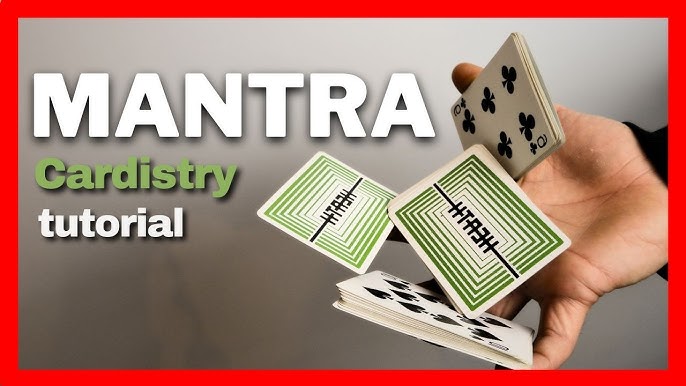
Mantra is one of the greatest one handed cardistry of all time. The move itself involves cutting a deck into two halves, then holding the lower packet in the lower part of your hand. The upper packet is then split into two using your thumb, simultaneously dragging out a single card out and then later combining the middle and lower packet together, flaring out the single card.

Triforce, also known as Russian Pyramid , is a pyramid-shaped display made of three closely connected triangles. Two building methods are commonly used: Using the long edges of the cards. Using the short edges of the cards, resulting in a taller structure. References Ekaterina using this name in the film and in its title, https://www.youtube.com/watch?v=B27aJaIBfZk&t=17s sedimental channel, https://www.youtube.com/watch?v=4YsemigJrBs
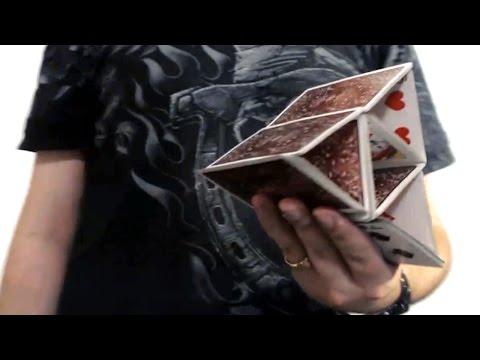
One Handed Triforce is widely regarded as one of the most difficult moves in cardistry. It is a highly complex structure built from three interconnected triangles forming a stable formation. The construction process involves carefully separating additional packets and gradually sliding them into place under controlled tension. Origin Antoine Thomas tells the story of the trick: I did play legend of zelda myself and forming a one-handed triforce is an idea that has been tickling that fractal-friendly mind of mine ever since I did my first square struct. The complex nature of that particular structure obviously wouldn't allow me to do a quick and flashy formation, yet I wanted something pleasing to watch... The solution was to make the formation itself a crazy recasting sequence, made of structures like the pentagon, the square in pentagon, the house, and the triple triad, leading to that dream-come-true climax. References quote from the description of video from XCM Vlog by Antoine on YouTube, https://www.youtube.com/watch?v=7BmP9GS8vdo&list=PLB6795B5456D9D846

Prism is a modern classic flourish that involves constructing a complex card structure and rotating it around its own axis. The move is highly versatile, allowing for a wide variety of performances. Currently, the record for the highest number of layers constructed is 12, held by Hans Lankamp. Mechanics There are two ways to prepare the structure for spinning: no-cut method – the easiest and least demanding approach. Cards are drawn into the hand to form a triangle, after which packets are placed on the top and bottom. This method is especially useful for larger Prisms. cut method – separate the top packet and position it between the index and middle fingers (for example, using a Revolution Cut). Next, separate a larger group of cards from the thumb packet using the middle and little fingers. Then slide the ring finger beneath the newly formed packet to take another group of cards from the thumb packet. Finally, take a small group of cards from the outermost packet and place it beneath the structure to complete the base. At this stage, the structure should be stable enough to support itself on your hand or another flat surface. Once you are confident that the structure is stable, place the thumbnail at the center of the bottom packet and the index fingernail of the opposite hand at the center of the top packet. To initiate the spin, use the ring finger of the first hand. The rotation is then maintained by making a smooth circular motion with the wrist or the entire arm. A slight offset from the center of the thumbnail or index fingernail may help maintain a smoother rotation. Once the rotation has stopped, the structure can be presented in the most display view. Remove the opposite hand, slide the thumb out of the structure while keeping it extended, and present the completed construction on an open palm. Variations Variations differ in the shape of the structure, the number of layered structures, or the ability to perform two independent Prisms simultaneously. The most common shape-related variations include: A rhombus. An M-shaped Prism (referred to by the creator as "prisM"). A tower made of permanently bent cards arranged in an alternating pattern (known as "Prismeme"). References Instagram, Hans doing the record-breaking Prism https://www.instagram.com/p/DXUgi-5DKZk/ (0:41 to the end) https://www.reddit.com/r/cardistry/comments/1cojhrk/a_few_fun_prism_variations/ (0:17 to 0:31) https://www.reddit.com/r/cardistry/comments/1cojhrk/a_few_fun_prism_variations/ Instagram story on Andrew's official account (fourth slide): https://www.instagram.com/stories/highlights/17943856048346310/ Andrew's Instagram story (second slide): https://www.instagram.com/stories/highlights/17943856048346310/
