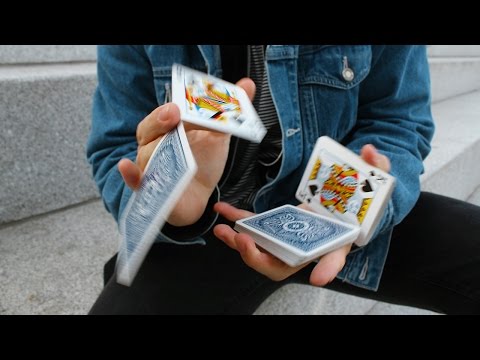
New to cardistry? Start here. This guide walks you through what cardistry is and how to take your first steps.
Cardistry is the performance art of card flourishing. The term cardistry is a portmanteau of card and artistry. People who engage in cardistry are colloquially known as cardists.
Cardistry involves the use of hands to create cuts, displays, fans, patterns, and sequences through the use of playing cards. Various arm-spreads, cuts, shuffles, and springs can be used. The intent is to create a captivating motion and beautiful display. The effects are limited only by the types of cards used, the imagination, and the degree of manual dexterity of the performer. The presentation is typically neither “illusionary” nor purportedly “magic”; rather, it is more like juggling, mime, or similar entertaining activities.
Source: Cardistry — Wikipedia, licensed under CC BY-SA 4.0.
First, pick a deck. Then work through the Cardistry Fundamentals playlist to build your base. Once those feel comfortable, explore the moves in the Beginner’s Starter Pack playlist. From there, keep discovering new moves in the archive. Have a question? Check the FAQ.
A compilation of the basics of cardistry. This will get you familiar with grips and simple foundation moves.
Some fairly easy cuts to learn once you have learned the basics.
A list of moves that can be incorporated into combos.
What decks are good for cardistry?
Generally, it is recommended to start with paper cards, as certain styles of cardistry simply cannot be done with a plastic deck. The deck should also be standard poker size, unless your hands are significantly larger or smaller than average.
Are all paper cards the same?
No, paper decks can vary greatly in stock, texture, finish, and cut, which all play a major role in how well a deck handles. It is definitely worth trying out different paper decks to find the style that suits you best.
Which moves should I learn first?
Many cardists suggest simply learning moves that you like and genuinely want to perform. That is the best way to stay consistent while practicing.
How do I preserve my cards?
Your deck’s worst enemies are dust and humidity. To protect it from dust, always keep your cards in their tuck box, and wash your hands before practicing - making sure to dry them thoroughly, of course. For humidity, an A/C or a dehumidifier works well.
What are some advice on how to film a cardistry move?
Use a clean background, good lighting, and a stable camera angle that clearly shows both hands and the deck. Avoid excessive editing or camera movement, since the goal is to make the move easy to see and understand.