20 moves

Holy Grail, less commonly known as Azlan’s Cut, is a construction-based display featuring a diamond-shaped structure framed by packets at the top and bottom. It is built step by step by pushing successive groups of cards back into the deck, then completed with a single motion that "unlocks" the entire structure by spreading the fingers. The move was first presented at Cardistry-Con 2025 in New York. References this name was used in the description of the Cardistry Con 2025 premiere (move number 25) https://www.youtube.com/watch?v=bhjmmJpHpM8
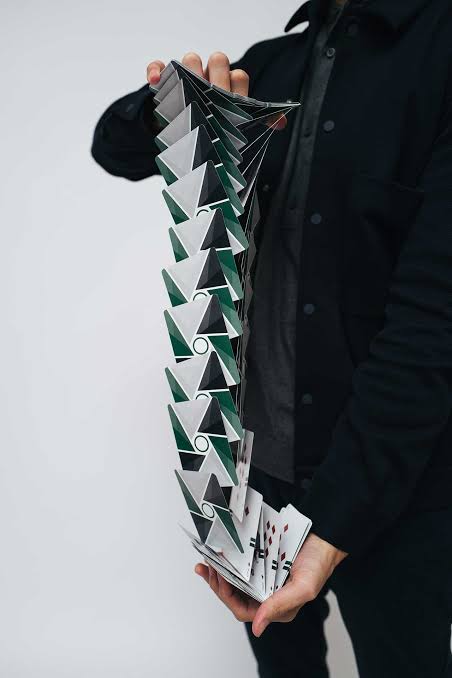
V-Cascade is a move that was first showcased in Liquid Paper by Virtuoso. It is featured in the introductory section of the video, ending roughly around the 10-second mark. The move begins with a faro shuffle, with the cards falling gracefully into the lower hand in a V-like shape.

Super Fan is a fan in which interlaced cards slowly expand into a circular display under tension. Mechanics The cards are positioned similarly to a Cascade, forming a "V" shape. The interlaced section is supported with the other hand, while the thumb and middle finger grip the outer ends and bring them together. When the hand is moved away, the stored pressure causes the cards to rotate around pivot point, creating the characteristic fan. Variations Popular variations include: A fully one-handed version, including the interlacing and tensioning of the cards. A double Super Fan, where two fans are created simultaneously, with the cards sliding on the thumb and middle finger of the opposite hand. References Nanh Kiem, https://www.instagram.com/p/BVXNG82gt4n/ Nikita Yatsik, https://youtube.com/shorts/u2GDo48mCks?si=5-rHCc4W2gqLiiuk


Inspired by a new Faro mechanic that waterwheel used, I wanted to see if there were other unexplored Faro mechanics and spent a few months playing with different things and ended up with using pressure to un-faro a deck. Fun fact: I discovered it while using blank cards in an army camp because we weren’t allowed to bring Playing Cards into camp.

Cascade is one of the classic card drops. Interlaced cards are released freely, creating a waterfall-like effect, known as a cascade. For smoother performance, newer decks are recommended.
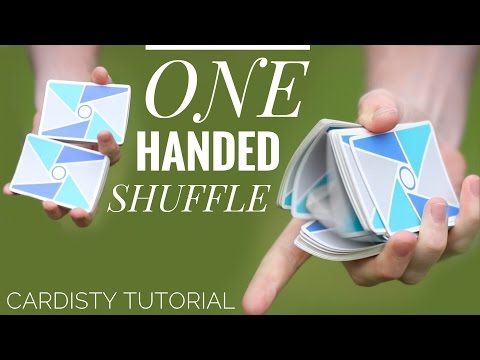
A One-Handed Shuffle is a technique of shuffling cards using a faro-style interlace performed with a single hand. The quality of the shuffle is heavily dependent on the condition of the deck, especially the sharpness and precision of the card edges.

The Tunnel Shuffle is an eye-catching shuffle based on a faro interlace, finished with a long bridge that resembles a tunnel-like structure. After the cards are interlaced, they are typically spread over the knee, then bent in a controlled way similar to a riffle bridge, creating a smooth, arched tunnel effect.
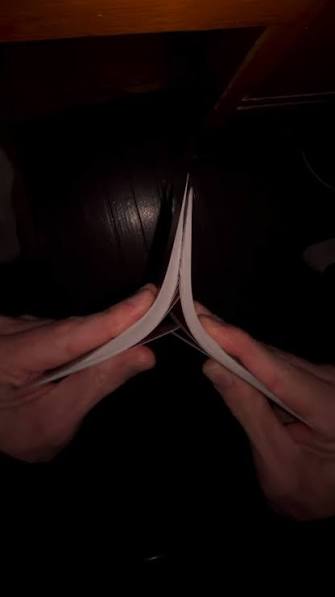
Faro 2 is a unique move that involves splitting the deck into two pieces, then spread them out. After this, interlace the two halves together by bending them into each other. You can then perform a bridge, or go into another move.

A precise shuffle where two equal packets are woven together card-for-card, creating a perfectly interlaced deck. In cardistry, faro is often used as a technique for setting up or enabling moves, especially displays, weaves, and packet-based sequences.

One-Handed Table Shuffle is a technique that combines elements of both riffle and faro shuffling. Two aligned halves of the deck are placed close together at an angle. The index finger is then positioned at the point where the corners meet, lifting the packets upward while the remaining fingers press them together from the sides, allowing the cards to interlace.

