17 moves
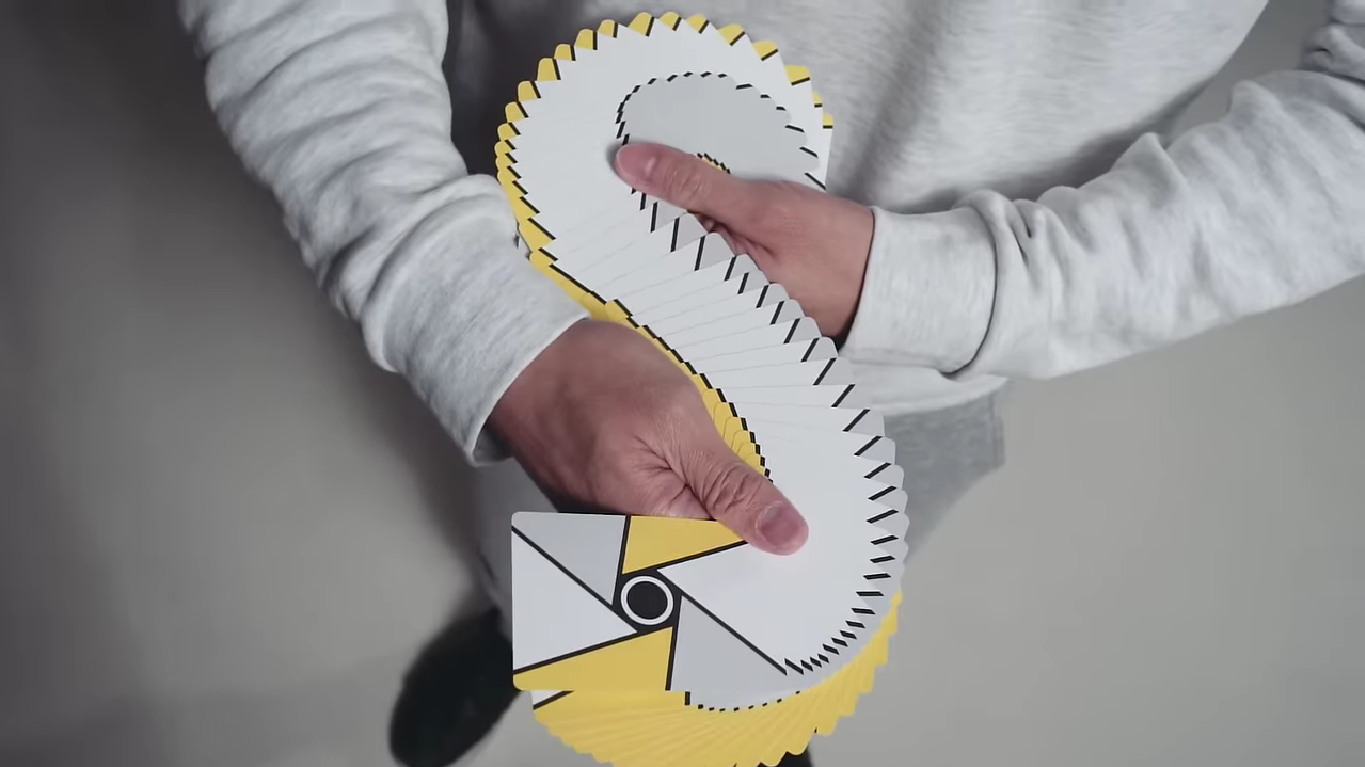
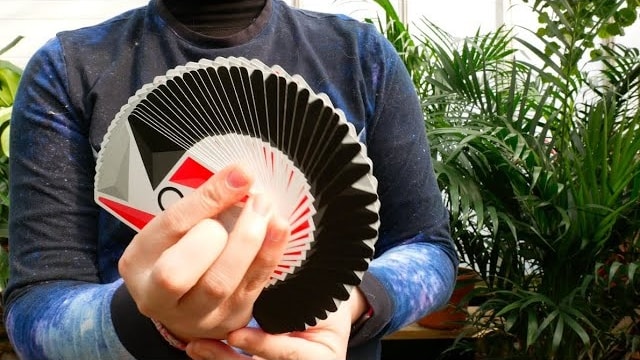
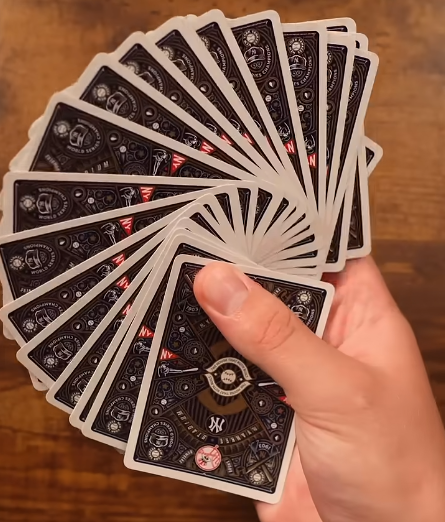
Indice Fan is a simple one-handed fan in which the cards are spread primarily using the index finger. It begins from a dealer grip, with the index finger curled underneath the deck. The cards are spread with a single fluid motion by extending the index finger while applying pressure to the deck with the index finger and thumb. For a more even spread, the remaining fingers can also push the rest of the cards during this stage.
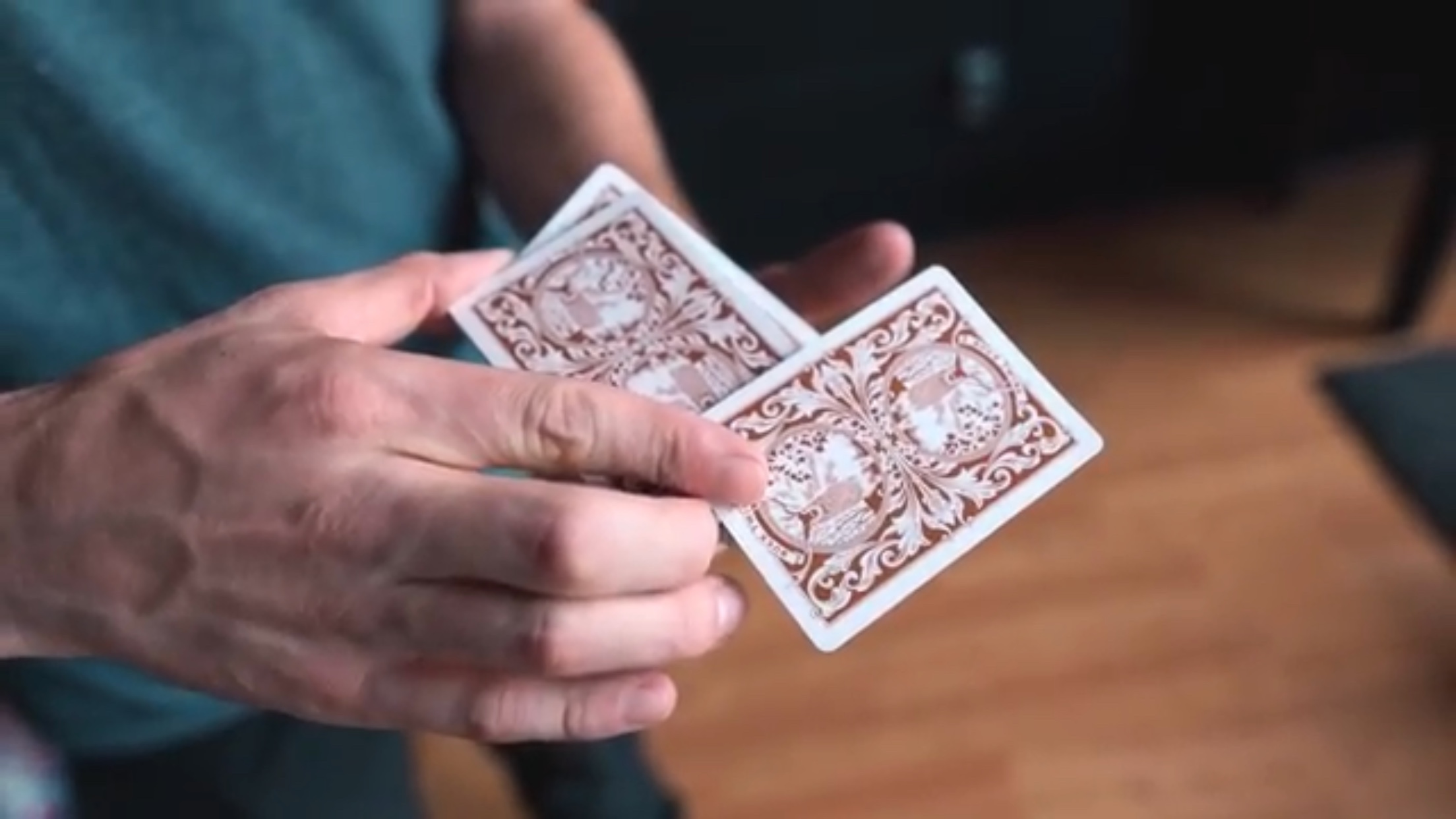
The Index Push Off is an easy, not so beginner friendly, One-Handed one card extension. It is fundamental for lots of flourishes and should be learned close to the start of one's cardistry Journey.

Hot Shot is a aerial card shot that makes the card glide in the air by the action of the middle and pointer finger flicking it from the dack.

Waterwheel is an intricate flourish that drops a faro'ed deck of cards into the other hand in a fascinating manner.

Lite dribble is a flourish created as a closer for the move Seattleite. It consists in a corner spin into a dribble that makes the cards look like they are flowing to the the deck.

One-Handed Table Shuffle is a technique that combines elements of both riffle and faro shuffling. Two aligned halves of the deck are placed close together at an angle. The index finger is then positioned at the point where the corners meet, lifting the packets upward while the remaining fingers press them together from the sides, allowing the cards to interlace.

Butt Shuffle is a variation of the Table Faro Shuffle that is performed in reverse. It's a version, where the bottom of the cards touches the surface and the interlacing occurs from bottom to top. Its main purpose is to imitate a Table Riffle Shuffle, creating the optical illusion of a standard table riffle, while in reality the cards interlace one-to-one.
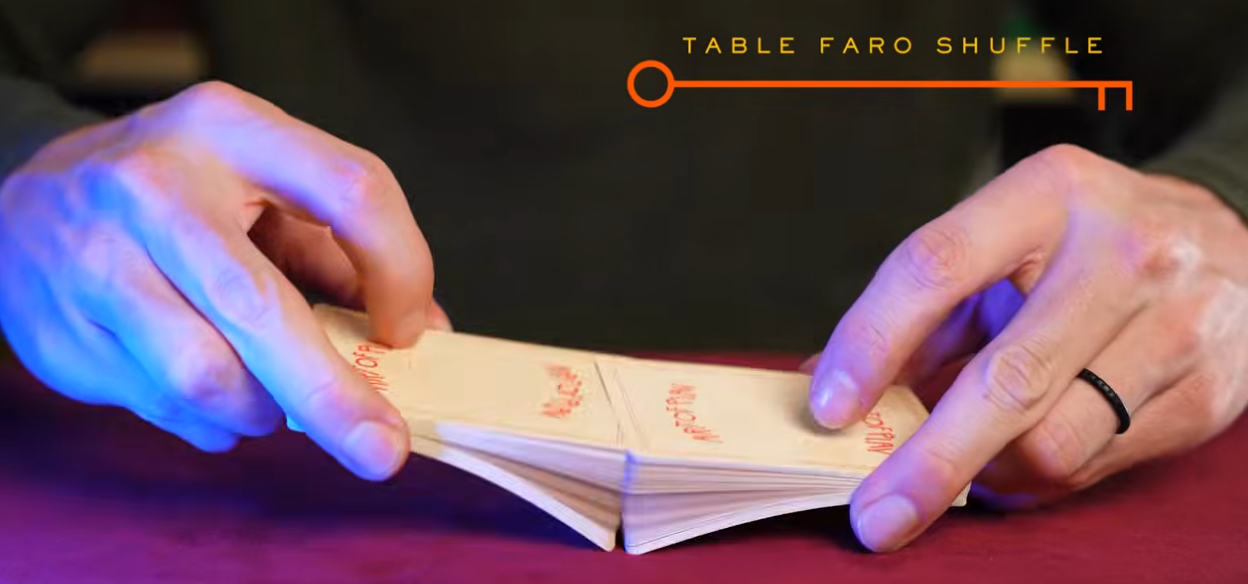
Table Faro Shuffle is a variation of the Faro Shuffle that perfectly interlaces cards on a flat surface. The technique is performed from top to bottom and only the edge of the cards touches the table

Waterbend is a smooth card drop in which the cards form two simultaneous arcs, creating the illusion of a flowing waterfall. Variations Two popular variations of the move are: The classic version, where the cards are arranged in a "T" shape. A variation where the upper packet is positioned noticeably higher. Origin I still remember the day Waterbend started to come together. I was just on my couch messing around with cards, I thought about how beautiful and iconic so many cascade moves are and how there aren't nearly as many of them as packet cuts. After a faro shuffle, I started experimenting with different grips to see what kinds of cascades I could create with the interwoven cards. At some point, I noticed the cards almost looked like they were falling and bouncing off my fingers, and I thought that was a really interesting idea to chase. After a ton of experimenting, I discovered that rotating half the deck sideways let the cards fall onto my thumb and align once landing in my other hand. From there, everything just clicked, and Waterbend was born. —Joe Feldpausch References Nikita Yatsik performing the variation: https://www.youtube.com/shorts/sq66-g-jd-I

Giant Fan is a variation of the thumb fan that uses interlaced cards to create a larger fan. A popular variation is to significantly rotate the top packet inward before performing the fan. References the variation's presentation, Youtube Short, https://youtube.com/shorts/B1mbZbHqwfM?si=1lJ4b5ddkx8qawmu
