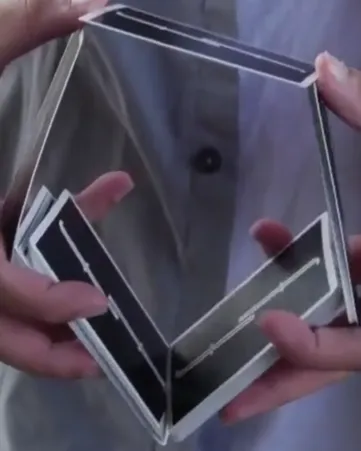
Moves in which cards or packets are arranged facing one another to form, or suggest, polygonal enclosures.
24 moves in the archive

the X display from acridid becomes 2 triangles that merge into one
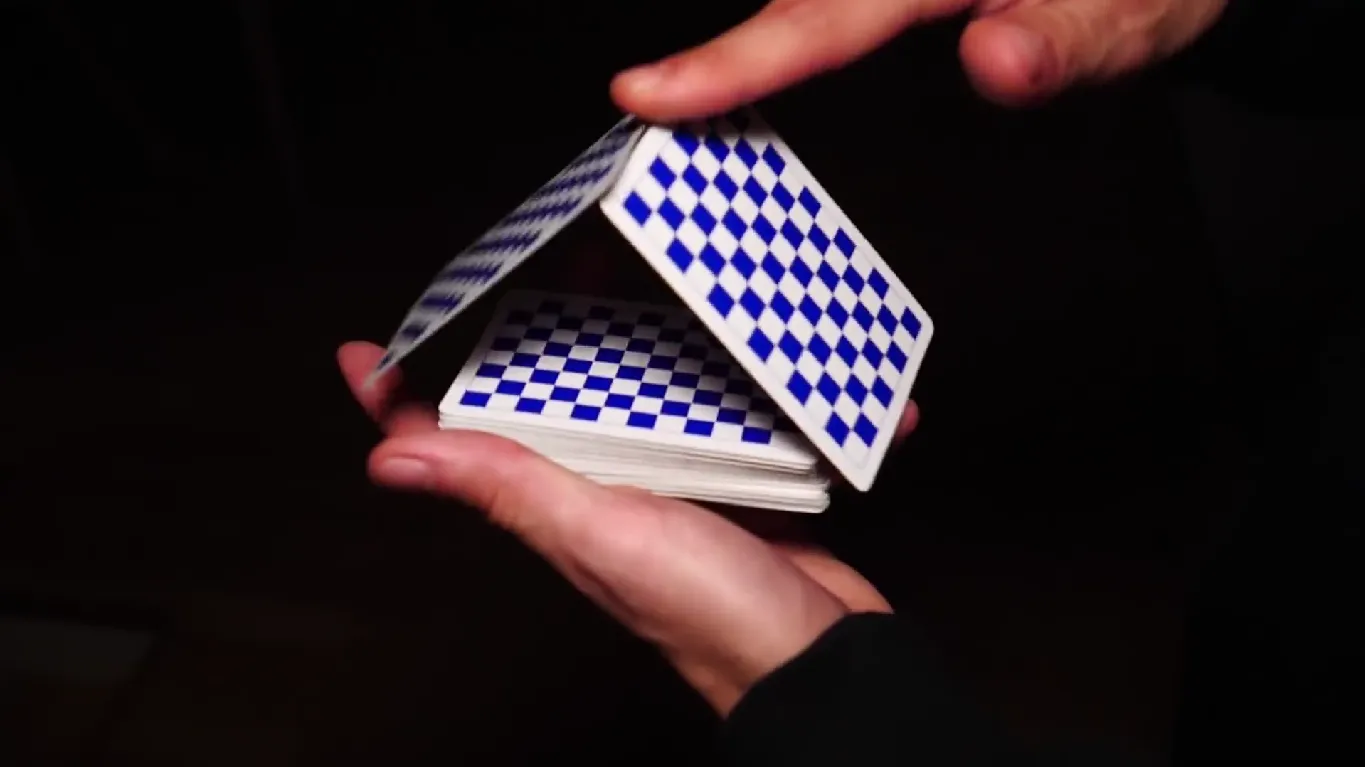
"XCM"// Cardistry by Noel Heath and Aviv Moraly
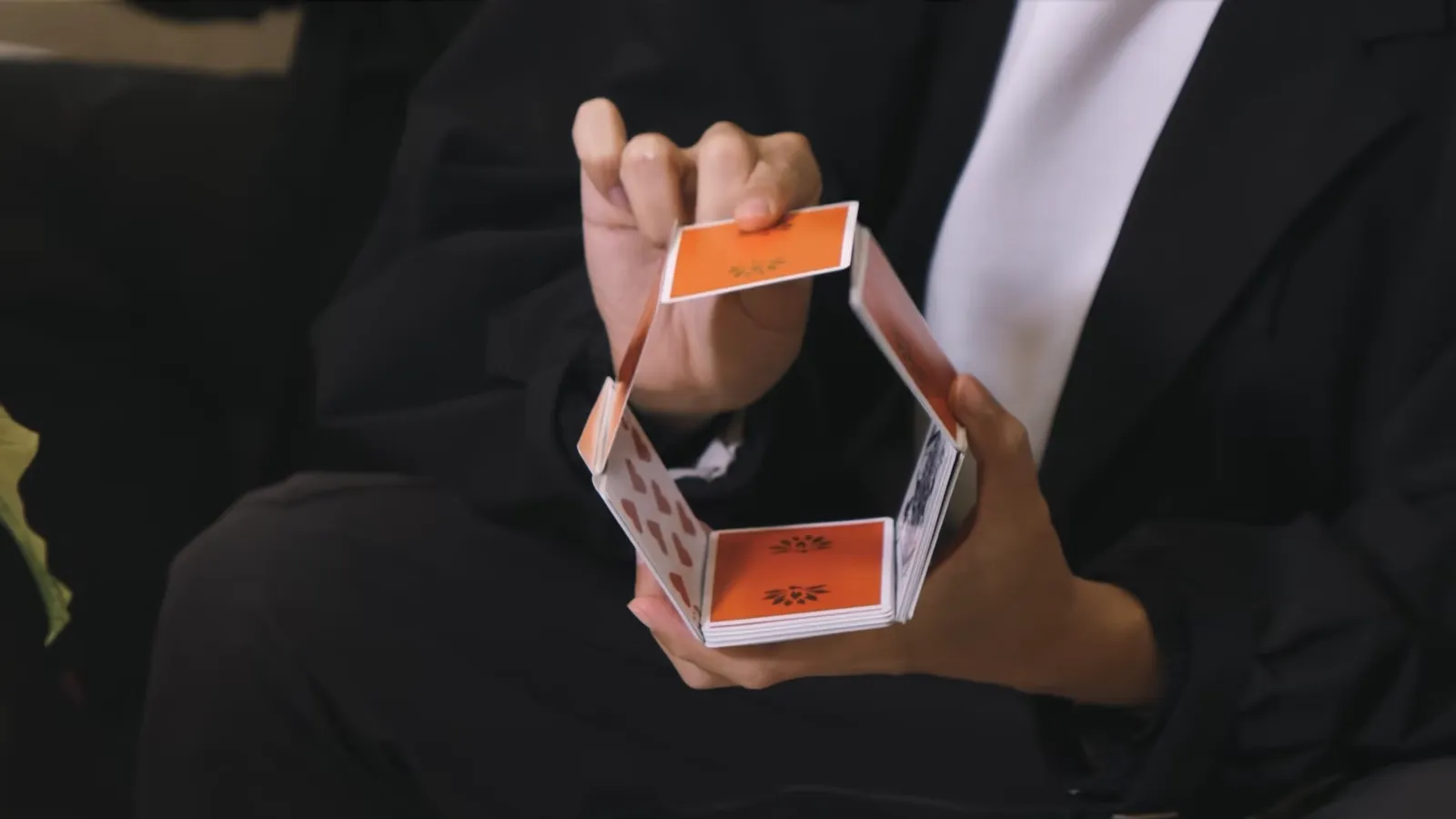
Graviton is a move wherein aerials are used to increase the amount of sides in a polygon on the non dominant hand, going from a triangle and into a pentagon. Finally, a single card is lifted to turn the pentagon into a hexagon display. It is seen in the cardistry video "ALPHA AND OMEGA" performed by Daniel Lin and Kevin Wu. It is the move displayed on the thumbnail of the video.
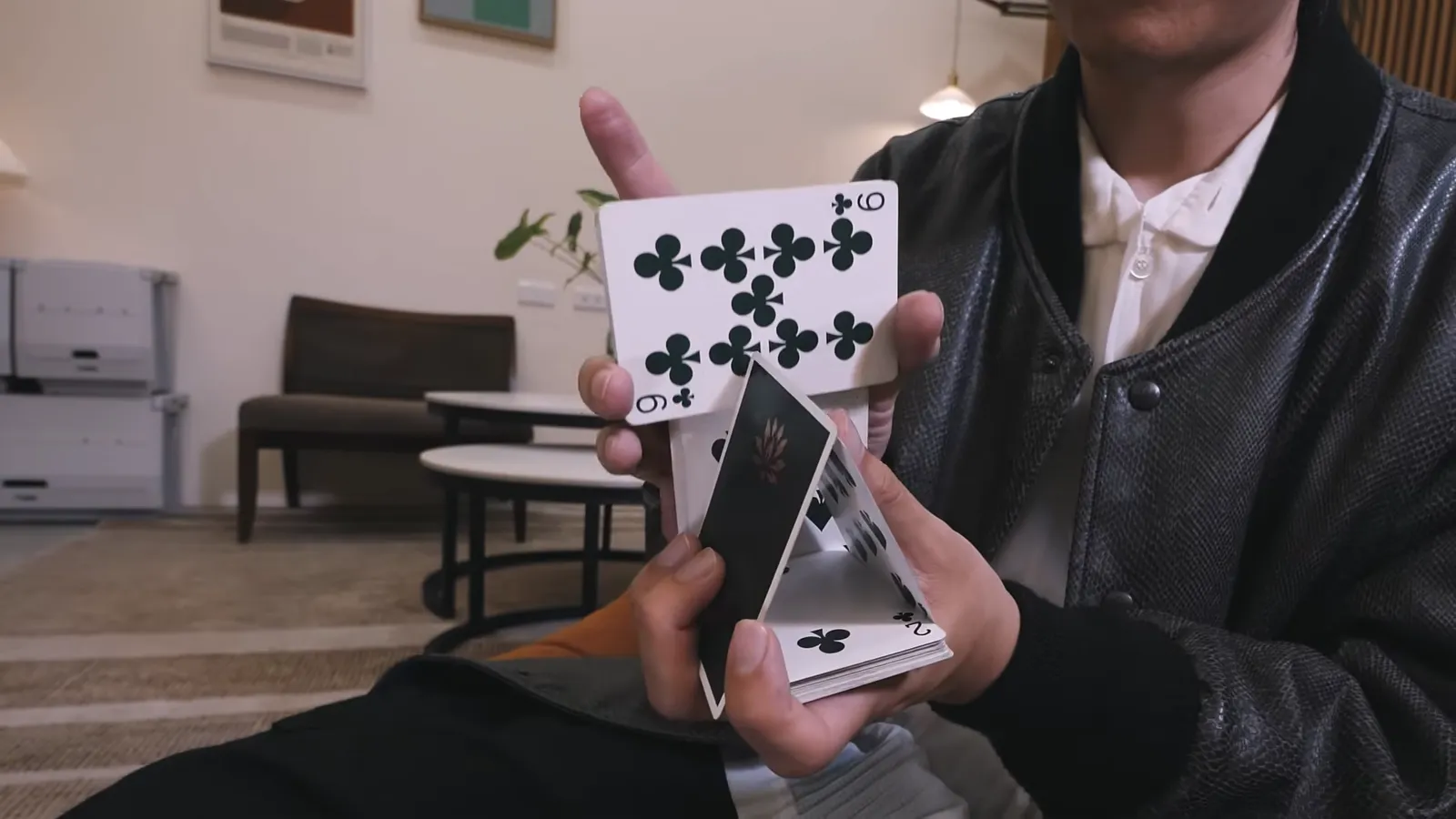
Pantheon Bar is a move wherein a triangle is formed in the middle of the packet cut, and is then bent to allow cards to go through the triangular hole. Seen in the cardistry video "ALPHA AND OMEGA", performed by Daniel Lin and Kevin Wu
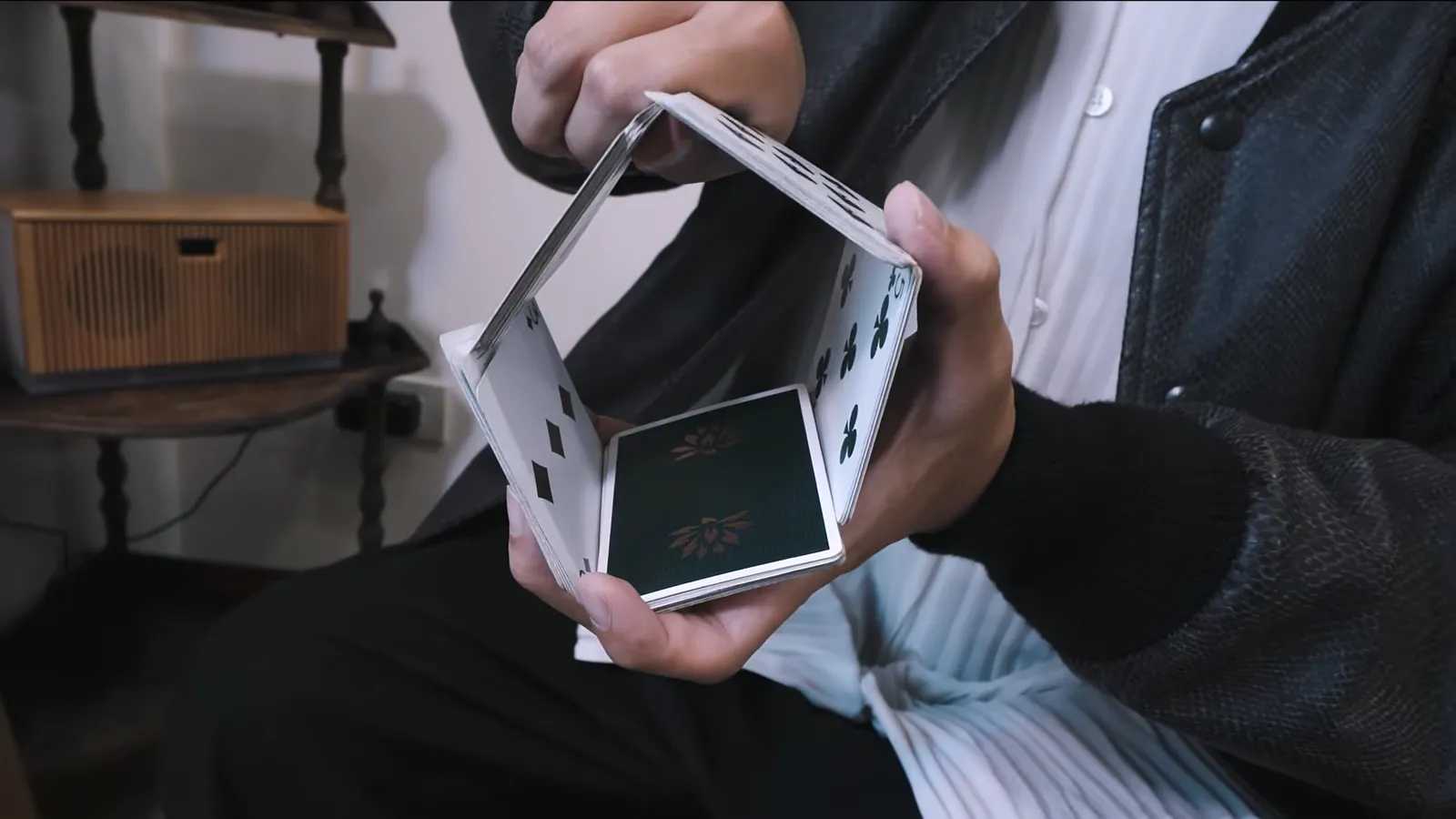
Tectonic 345 is a multiphase two-handed display that displays a triangle, rectangle, and then a pentagon. It is seen in the cardistry video "ALPHA AND OMEGA" performed by Daniel Lin and Kevin Wu
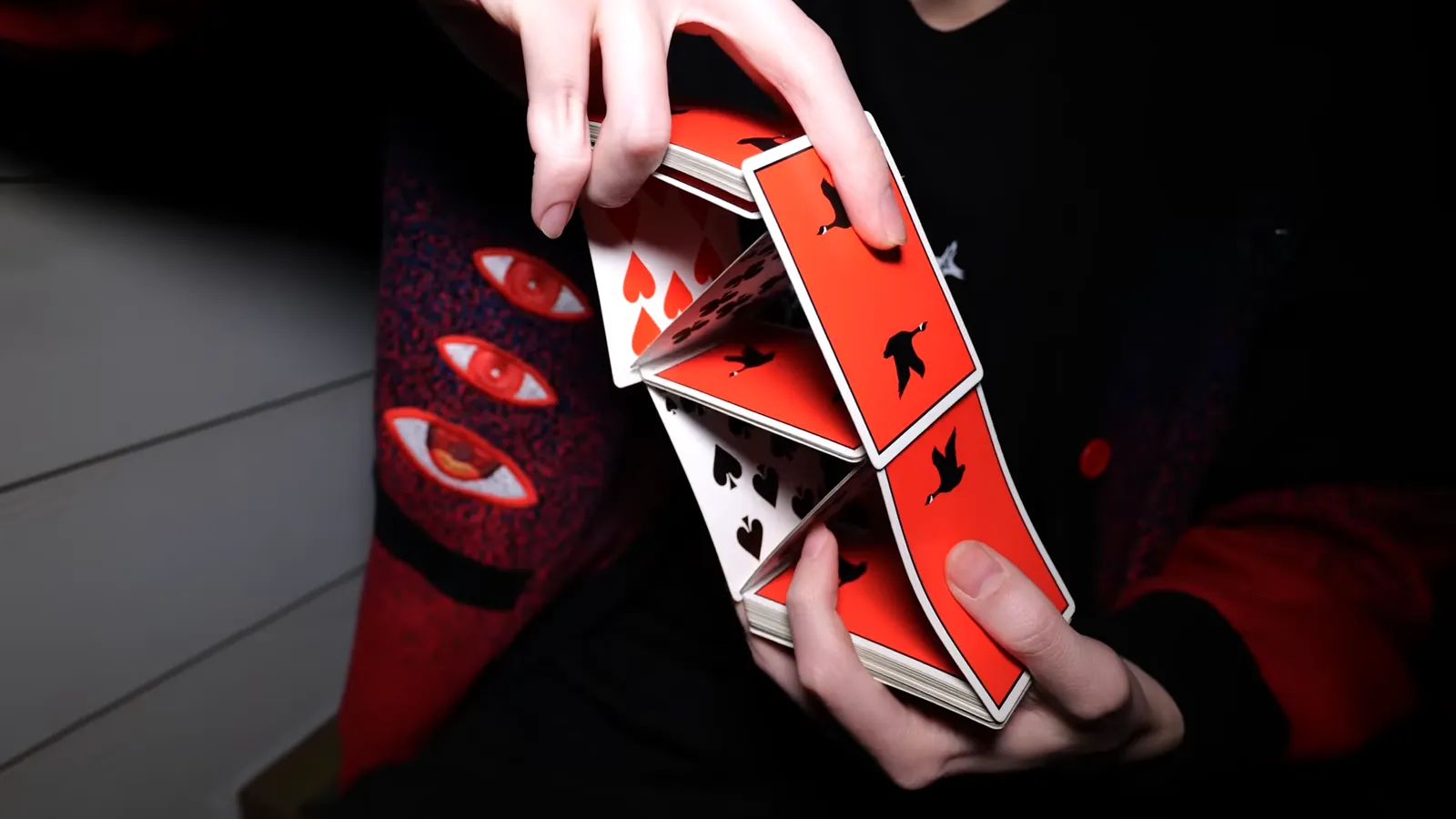
Stairway to heaven is a display of 4 connected triangles wherein the diagonal packets are perhaps supposed to represent the stairs. It debuted in Zeusy's cardistry video "IN YOUR DREAMS"
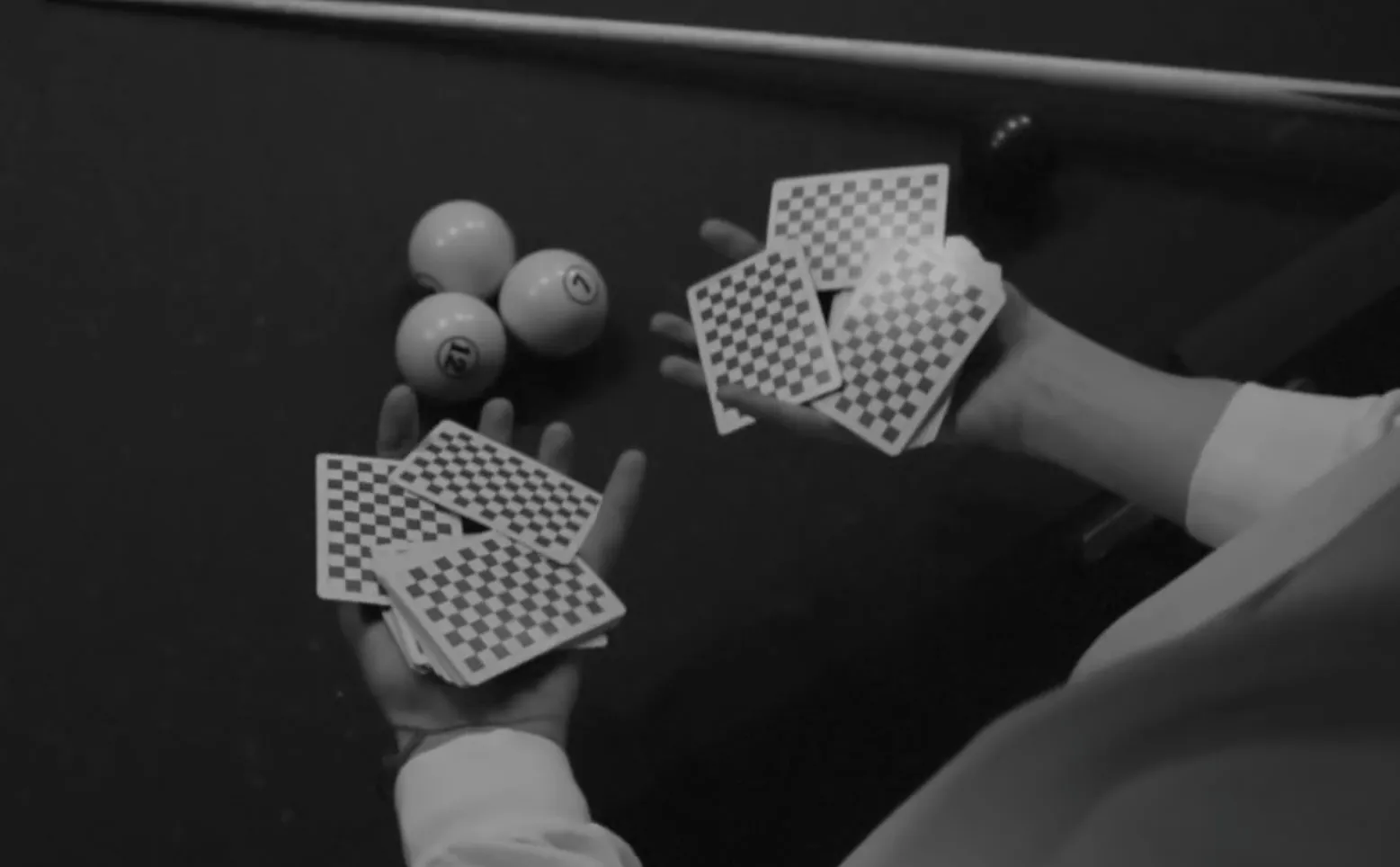
A quick and sudden double triangle display with interesting mechanics
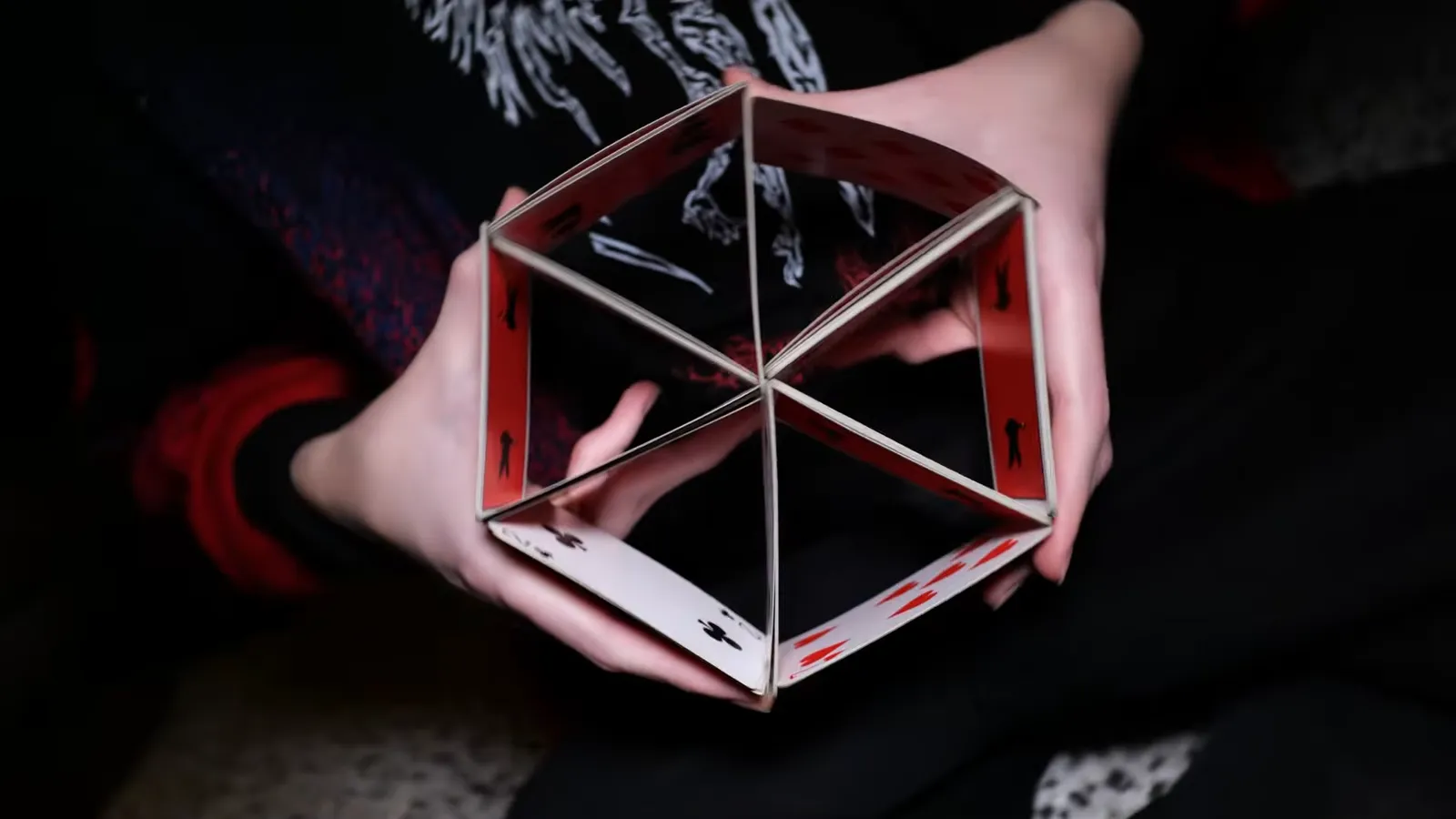
Hex is a hexagonal display consisting of 6 triangles. The move initially starts with 2 triangles, then gets to a 4 triangle displaty , and finally moves into a 6 triangle display arrangedin such a manner that it creates a hexagon. It debuted in Zeusy's cardistry video "IN YOUR DREAMS". It is the move shown in the thumbnail.
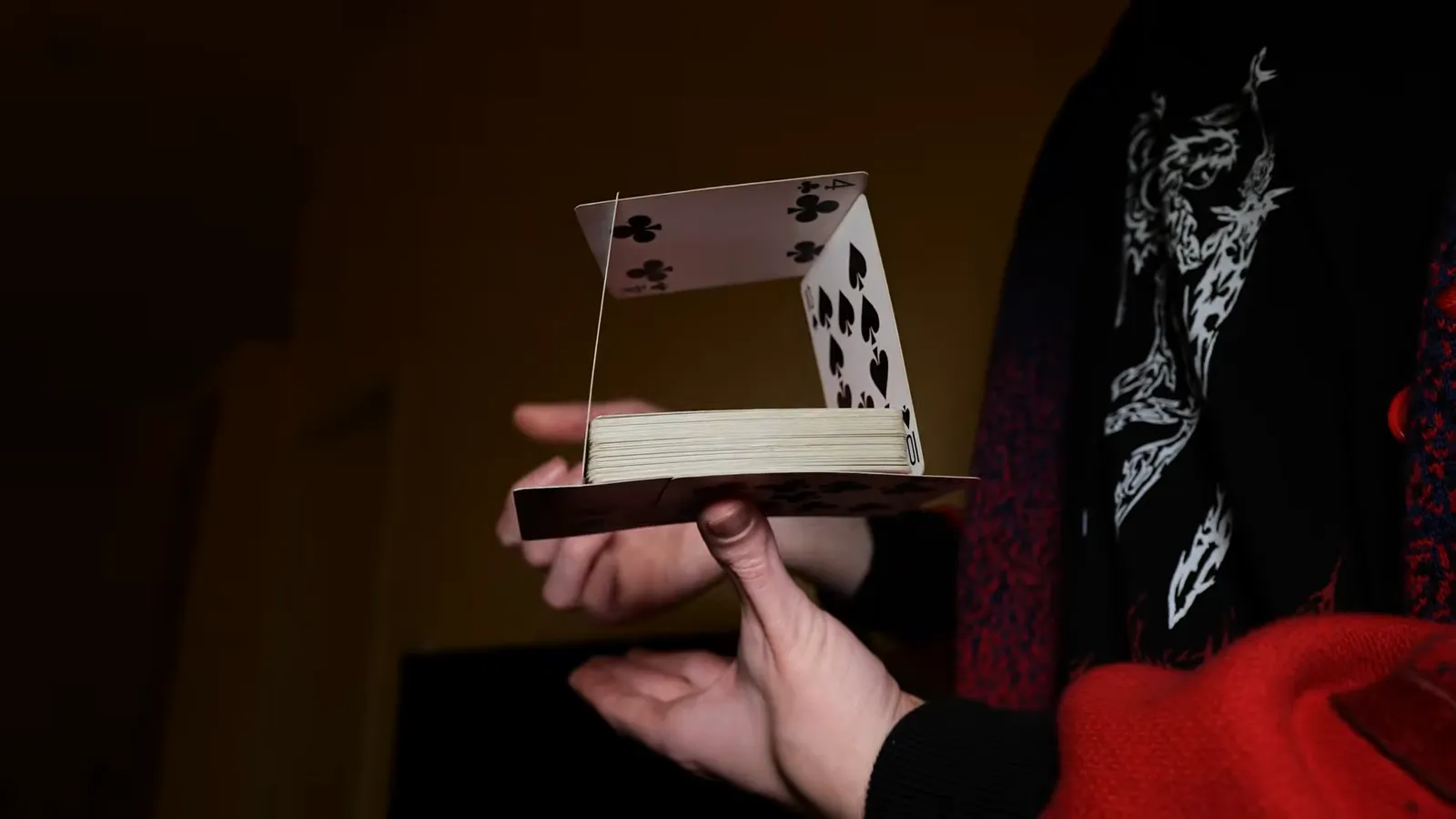
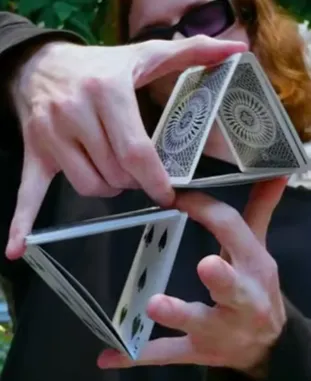
6 packet geometric move by jtra as shown in Full House. Features 2 triangles in an hourglass shape, then seperating and closing into a swuare formation.
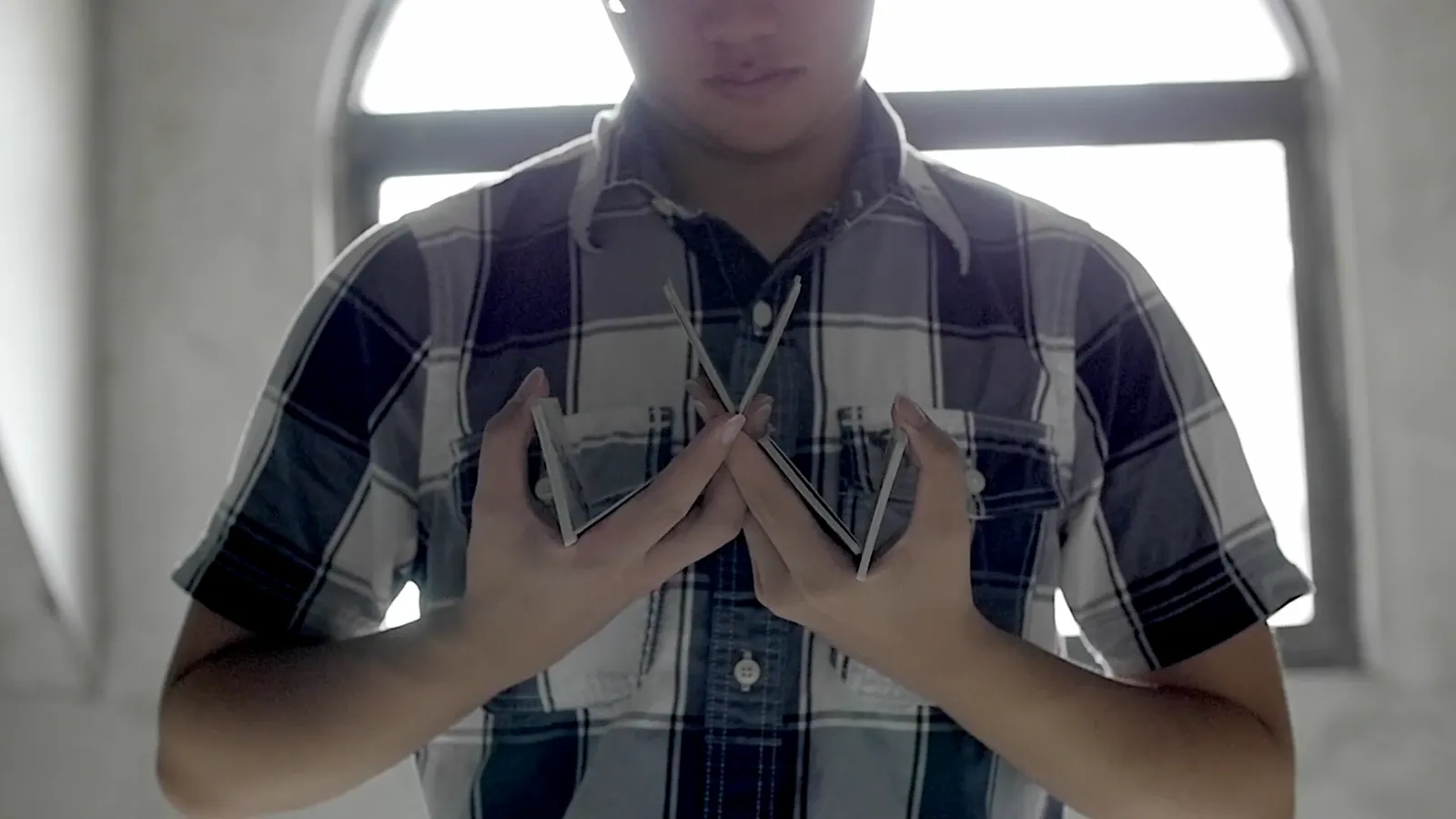
Troika is a move wherein two shortwise triangles are created, featured in the collection of 4 tutorials "Triplex" on New Deck Order

Fulsomfan is a display built around a triangle-shaped structure made of packets, with three cards slid out. Mechanics The deck is divided into three packets, with the middle packet pushed forward using the thumb. Once the triangle-shaped structure is formed, two cards are taken from the aforementioned packet and held between the fingers. The final card is slid out from underneath and pressed firmly with the chosen thumb, using moisture to keep the hanging card in place. History The creator says that he conceived the move as early as 2010, but “couldn't do it (cause of my tiny hands) untill 2012”. It was first published in his YouTube video Sleep [Birger Karlsson]. References fragment of the creator's description of the instructional video, https://www.youtube.com/watch?v=bNsL6cij3fA
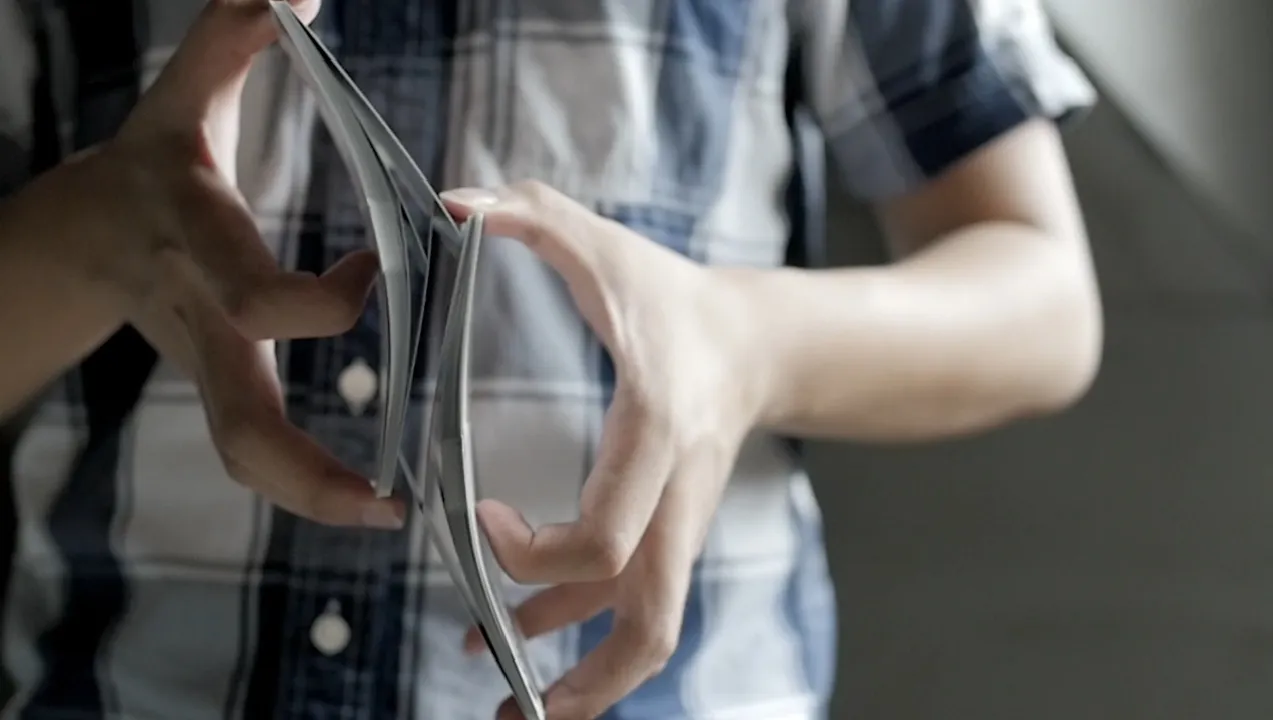
Brusque is a move utilizing the faro shuffle to make two longwise triangles, featured in the package of 4 tutorials "Triplex" on the New Order website
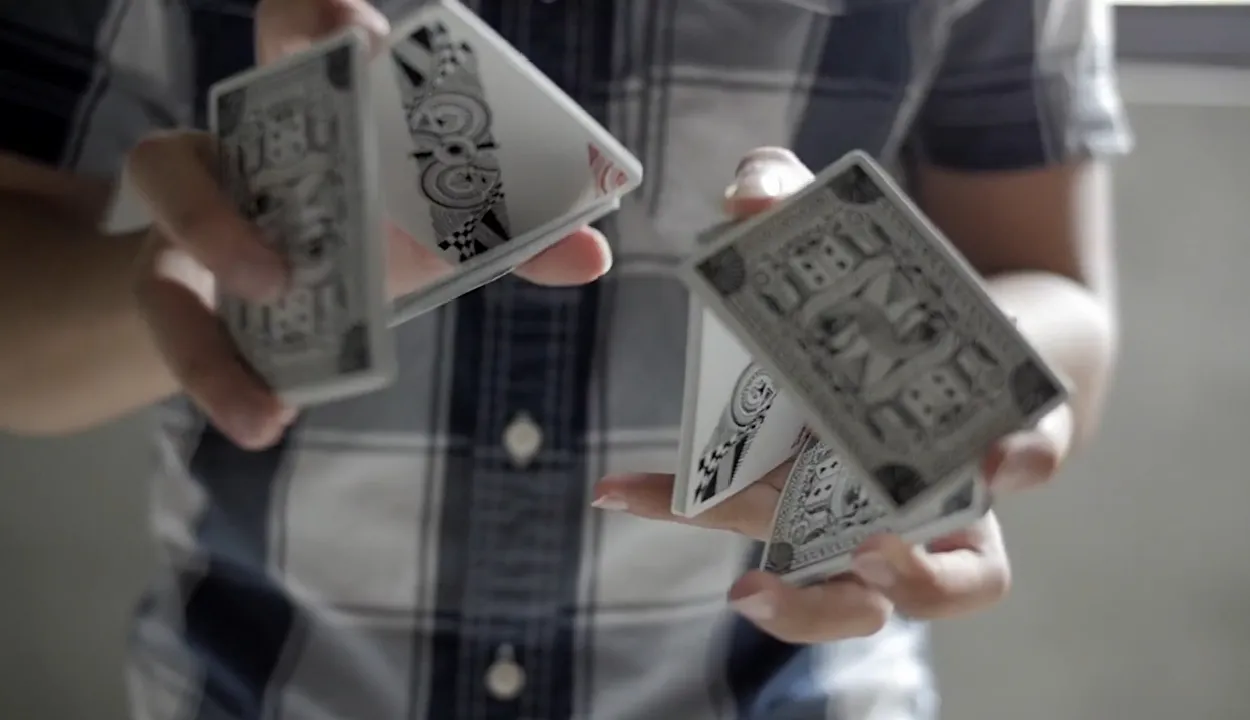
Triplex is a move wherein both hands rotate to create a triangle, featured in the collection of 4 tutorials "Triplex" on New Deck Order.
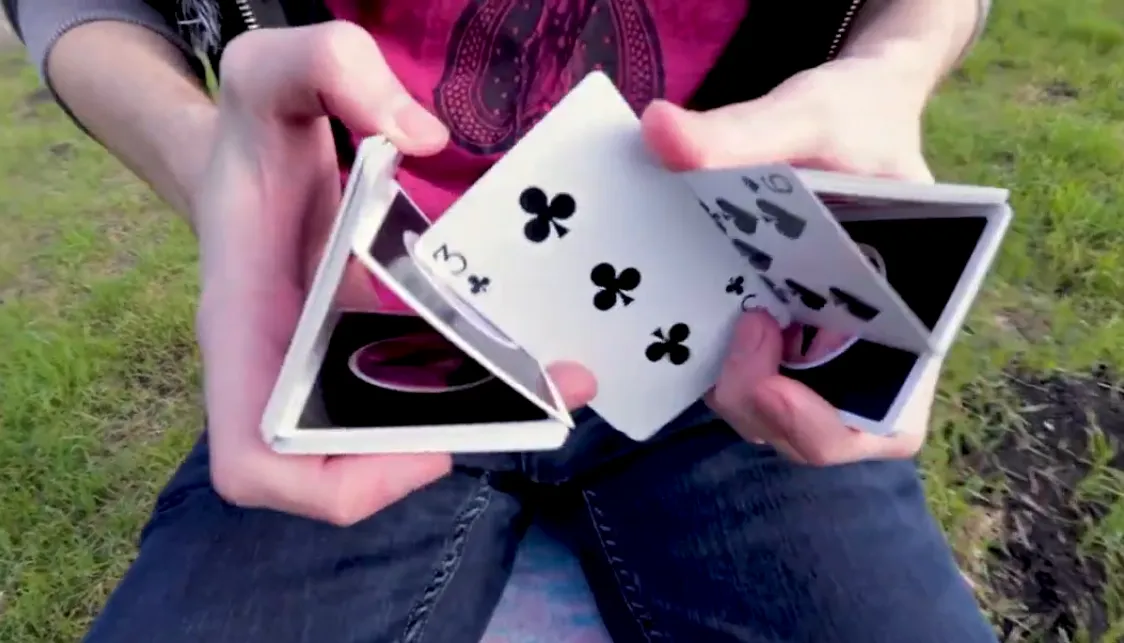
Moxie is a multi-packet cut characterized by a distinctive, single-packet sliding motion, in which one packet glides smoothly between two triangular cuts. Tips & Techniques Opening Motion: When performing the thumb cut with your right hand, try pushing the packet toward the base of your thumb. This can be especially helpful for practitioners with smaller hands. Middle Sliding Motion: Keep the triangular cuts loose and relaxed during the middle packet slide. Avoid applying unnecessary tension, as this can restrict the packet's movement. Slide Collapse Prevention: Once the triangular packets have closed, try opening both thumb cuts while simultaneously sliding the middle packet between them. This technique can help prevent the slide from collapsing. Important Note Moxie is a move that requires time, patience, and consistent practice to master. Do not expect to learn it in a single day. We recommend spending a few hours practicing each individual motion before progressing to the next section. Focus on developing control and consistency before prioritizing speed. Take your time, refine each motion, and let the smoothness develop naturally.

Spring Triangle, as the name suggests, is a move where the Card Spring move and Charlier Cut are combined into one. The cardist must first do a spring, then perform a Charlier Cut with their other hand to form a triangle. This move is frequently used alongside Trinity.

Trinity is an amazing move that allows you to effectively "duplicate" a charlier triangle in the right hand, then combine it back together into one triangle. When done smoothly at high speeds, it can look as if the second triangle magically appears.

Charlier Triangle, also known as the Triple Charlier or Delta (not to be confused with the two handed false cut Delta), consists of creating a triangle in one hand. This can be done with the other hand at the same time to create a visually interesting pattern.

Triforce, also known as Russian Pyramid , is a pyramid-shaped display made of three closely connected triangles. Two building methods are commonly used: Using the long edges of the cards. Using the short edges of the cards, resulting in a taller structure. References Ekaterina using this name in the film and in its title, https://www.youtube.com/watch?v=B27aJaIBfZk&t=17s sedimental channel, https://www.youtube.com/watch?v=4YsemigJrBs

Holy Grail, less commonly known as Azlan’s Cut, is a construction-based display featuring a diamond-shaped structure framed by packets at the top and bottom. It is built step by step by pushing successive groups of cards back into the deck, then completed with a single motion that "unlocks" the entire structure by spreading the fingers. The move was first presented at Cardistry-Con 2025 in New York. References this name was used in the description of the Cardistry Con 2025 premiere (move number 25) https://www.youtube.com/watch?v=bhjmmJpHpM8
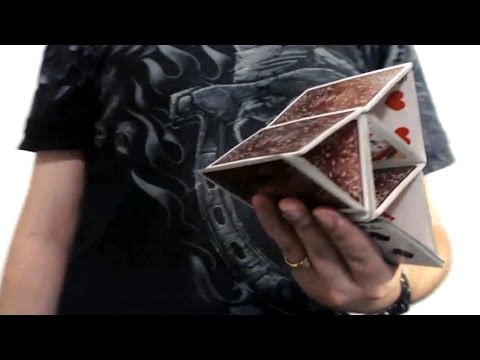
One Handed Triforce is widely regarded as one of the most difficult moves in cardistry. It is a highly complex structure built from three interconnected triangles forming a stable formation. The construction process involves carefully separating additional packets and gradually sliding them into place under controlled tension. Origin Antoine Thomas tells the story of the trick: I did play legend of zelda myself and forming a one-handed triforce is an idea that has been tickling that fractal-friendly mind of mine ever since I did my first square struct. The complex nature of that particular structure obviously wouldn't allow me to do a quick and flashy formation, yet I wanted something pleasing to watch... The solution was to make the formation itself a crazy recasting sequence, made of structures like the pentagon, the square in pentagon, the house, and the triple triad, leading to that dream-come-true climax. History The OH Triforce first appeared on cuso.com, an early cardistry forum created by Alejandro Portella as a hub for the cardistry community. The website has since shut down. In the original video uploaded to CUSO, opening the OH Triforce takes approximately 30 seconds. This remained the benchmark for nearly seven years, until Ryoma successfully performed the move in 15 seconds, halving the previous record time. The OH Triforce remains an exceptionally challenging move within cardistry, with only a handful of practitioners reportedly capable of performing it. Aside from Ryoma, Matt Fox is the only other cardist known to have claimed the ability to execute the move. References quote from the description of video from XCM Vlog by Antoine on YouTube, https://www.youtube.com/watch?v=7BmP9GS8vdo&list=PLB6795B5456D9D846

Prism is a modern classic flourish that involves constructing a complex card structure and rotating it around its own axis. The move is highly versatile, allowing for a wide variety of performances. Currently, the record for the highest number of layers constructed is 12, held by Hans Lankamp. Mechanics There are two ways to prepare the structure for spinning: no-cut method – the easiest and least demanding approach. Cards are drawn into the hand to form a triangle, after which packets are placed on the top and bottom. This method is especially useful for larger Prisms. cut method – separate the top packet and position it between the index and middle fingers (for example, using a Revolution Cut). Next, separate a larger group of cards from the thumb packet using the middle and little fingers. Then slide the ring finger beneath the newly formed packet to take another group of cards from the thumb packet. Finally, take a small group of cards from the outermost packet and place it beneath the structure to complete the base. At this stage, the structure should be stable enough to support itself on your hand or another flat surface. Once you are confident that the structure is stable, place the thumbnail at the center of the bottom packet and the index fingernail of the opposite hand at the center of the top packet. To initiate the spin, use the ring finger of the first hand. The rotation is then maintained by making a smooth circular motion with the wrist or the entire arm. A slight offset from the center of the thumbnail or index fingernail may help maintain a smoother rotation. Once the rotation has stopped, the structure can be presented in the most display view. Remove the opposite hand, slide the thumb out of the structure while keeping it extended, and present the completed construction on an open palm. Variations Variations differ in the shape of the structure, the number of layered structures, or the ability to perform two independent Prisms simultaneously. The most common shape-related variations include: A rhombus. An M-shaped Prism (referred to by the creator as "prisM"). A tower made of permanently bent cards arranged in an alternating pattern (known as "Prismeme"). References Instagram, Hans doing the record-breaking Prism https://www.instagram.com/p/DXUgi-5DKZk/ (0:41 to the end) https://www.reddit.com/r/cardistry/comments/1cojhrk/a_few_fun_prism_variations/ (0:17 to 0:31) https://www.reddit.com/r/cardistry/comments/1cojhrk/a_few_fun_prism_variations/ Instagram story on Andrew's official account (fourth slide): https://www.instagram.com/stories/highlights/17943856048346310/ Andrew's Instagram story (second slide): https://www.instagram.com/stories/highlights/17943856048346310/

Snap-dragon is a continuation for the One-Handed Shuffle that transforms the shuffled deck into a diamond-shaped structure. The deck is first pushed upward from underneath, causing the top cards to begin releasing from the interlace and form two packets resting against each other. Space is then created beneath the deck, allowing the cards to free themselves. The cards from the center are then slid inward toward each other, resulting in the characteristic rhombus shape. The name was created by the author because of the characteristic snapping sound made when forming the rhombus.