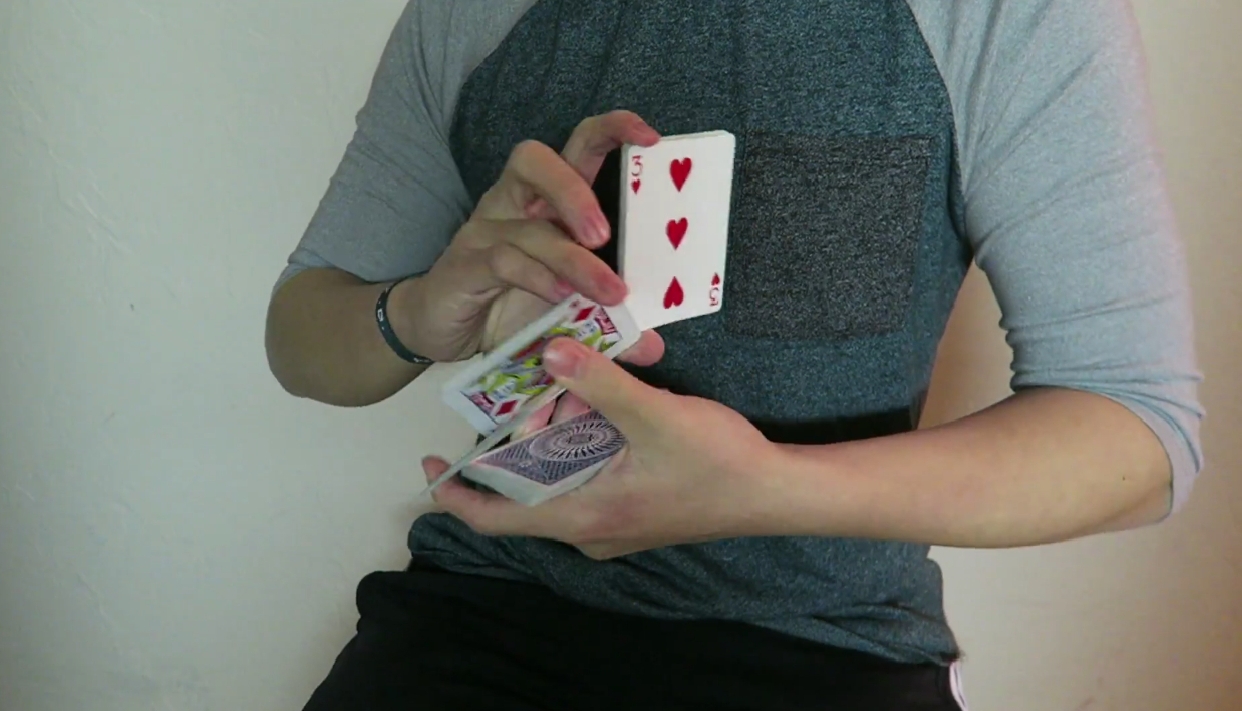
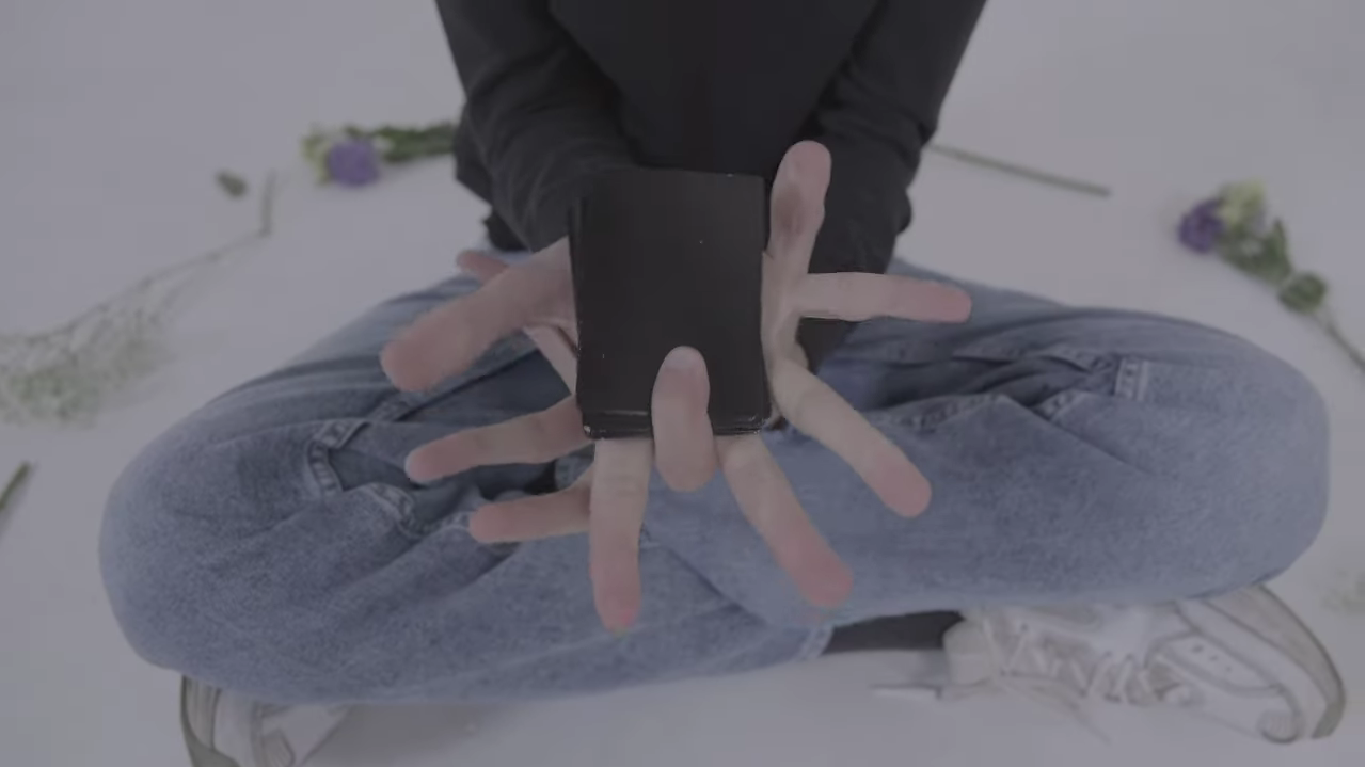
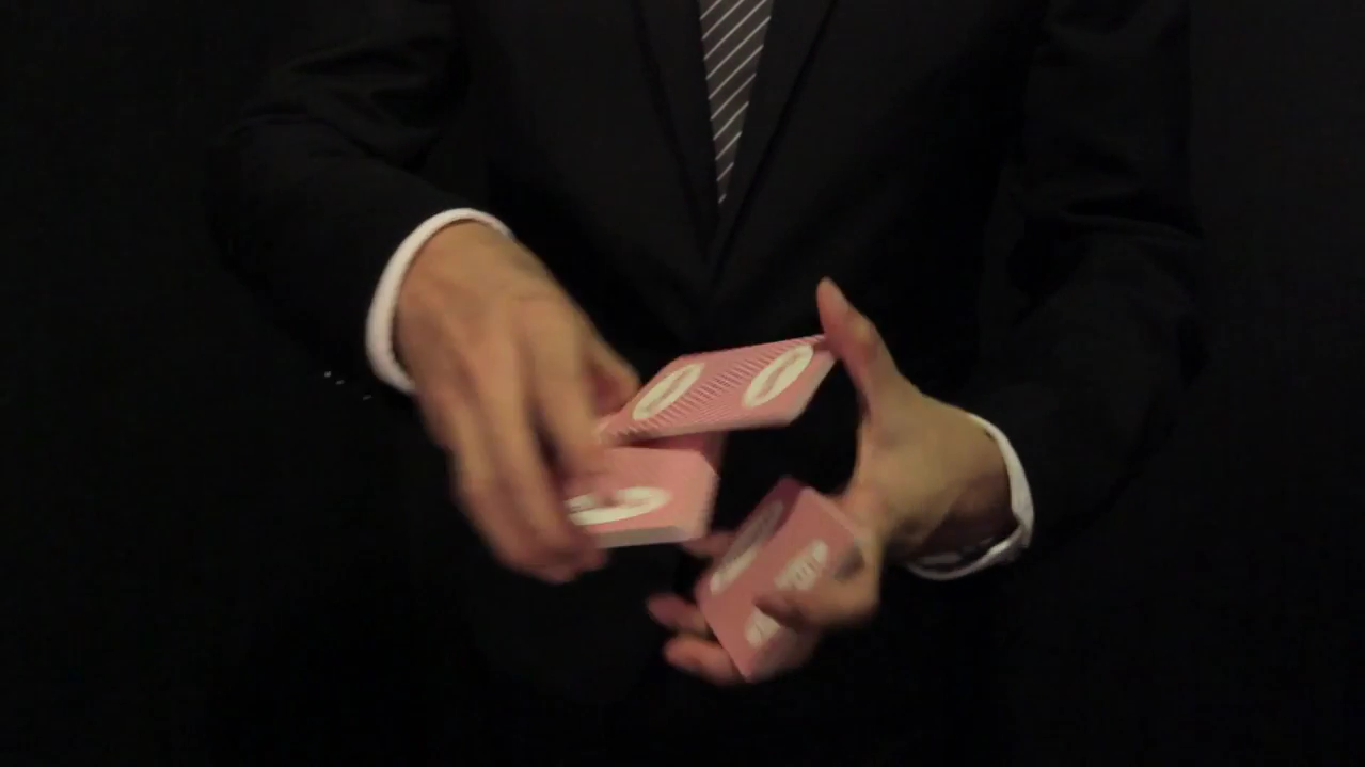
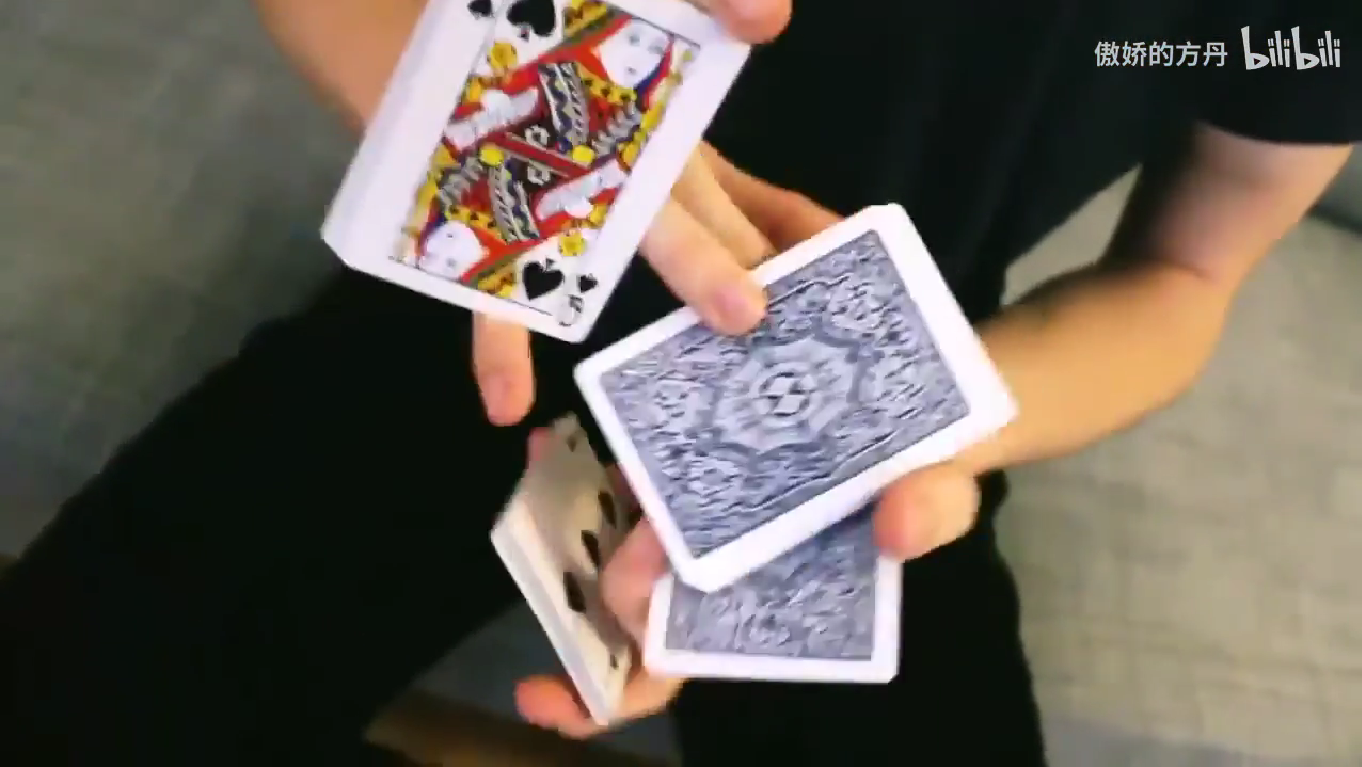
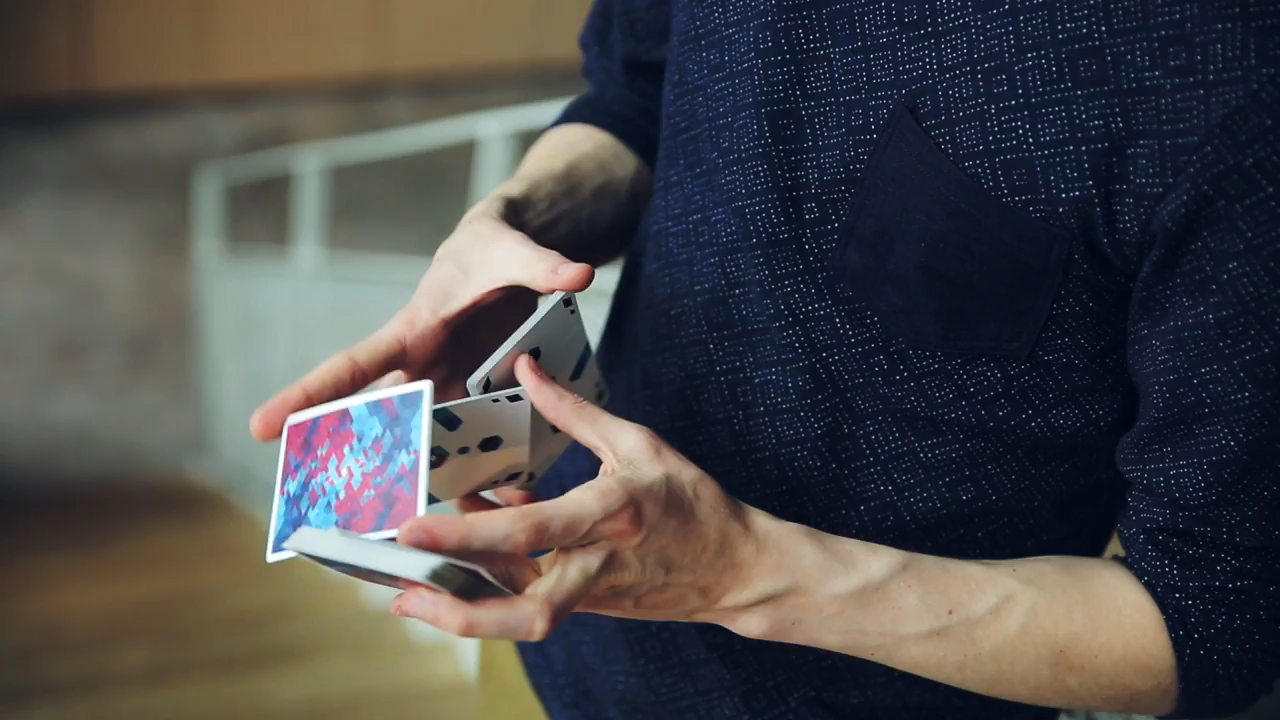
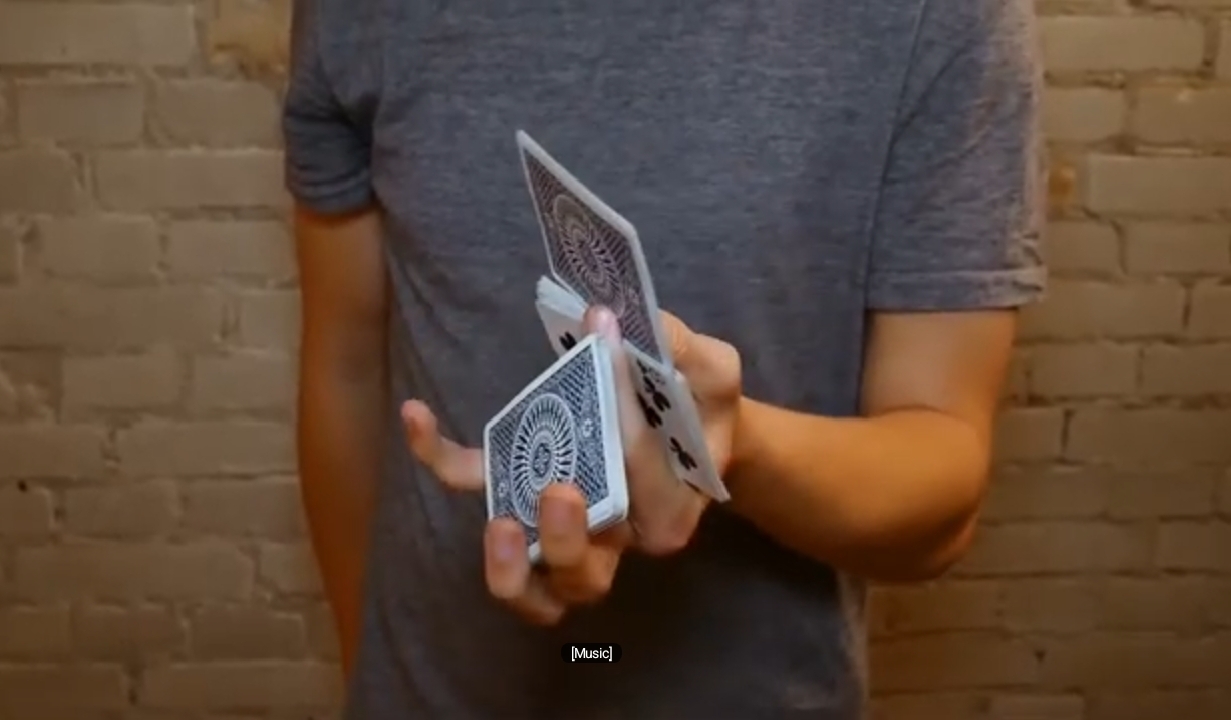
Moves that include a cut performed using packets of cards.
139 moves in the archive
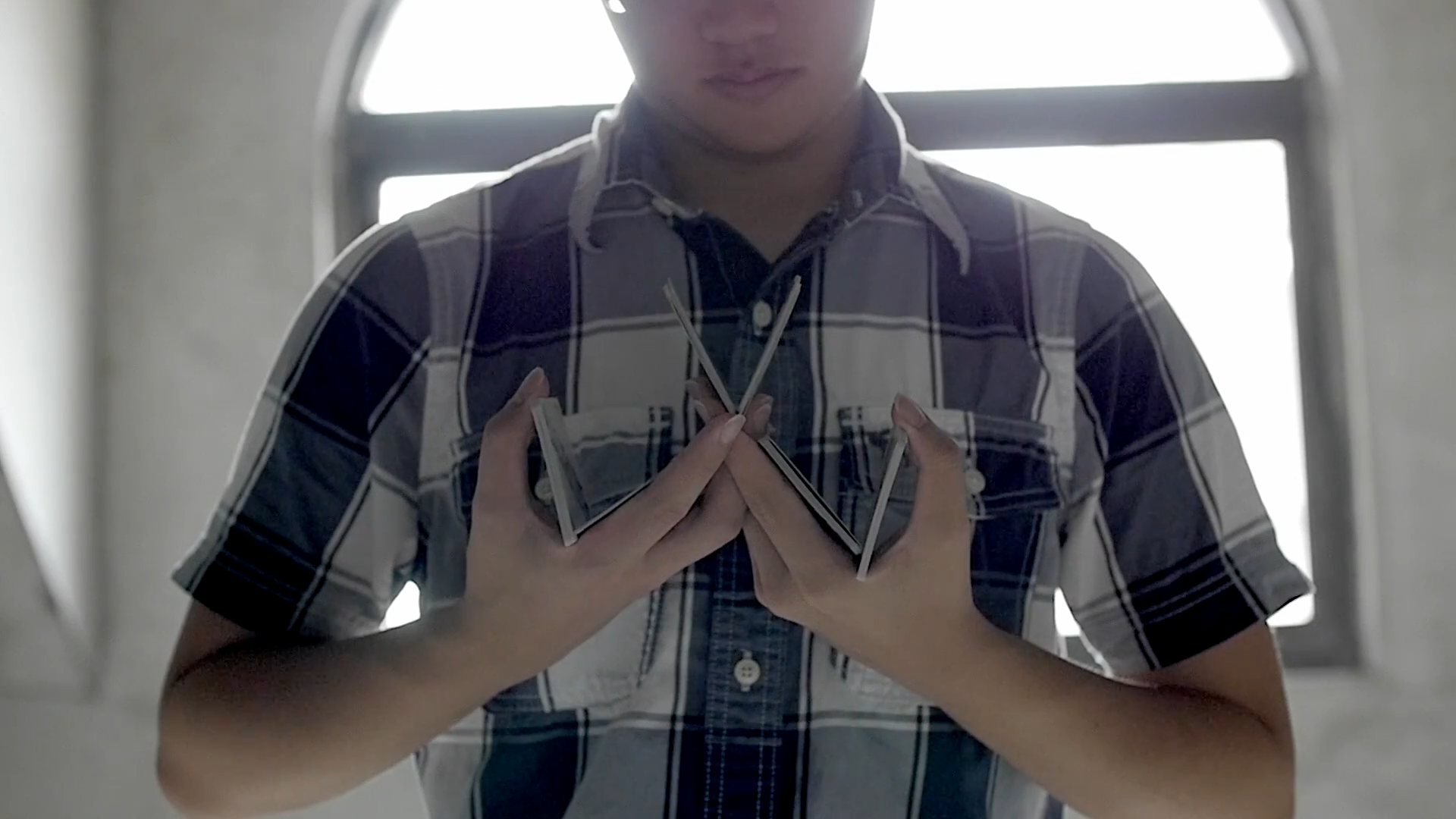
X-Cut is a simple display or twirl. The original version created by Jerry Cestkowski being a packet display and Kevin Ho turning it into a flashy twirl.

Pinball is a two-handed cardistry flourish based on an extended Z-grip structure where a single card slides down between open packets. The card rebounds across key hand contact points like a pinball before closing smoothly with a scissor cut motion.
Hook is a three‑packet cut distinguished by a sharp, hook‑like visual that occurs at the midpoint of the flourish. History Zach Mueller noted in the description of his tutorial, regarding the history of the move: This flourish was heavily inspired by Tobias and Oliver - when they stayed at my house in April, I really got into 3 packet cuts. There's a certain aesthetic to a cut with only 3 packets throughout the flourish that I really love. Tobias describes these as feeling more 'premium', and I would have to agree. There's something nice about 3 packets which move around each other without any additional packets being broken off, or single cards just randomly extending off of a packet. Transfix and Tailormade specifically were two I was very inspired by, and I was determined to make my own 3 packet cut. This was the result! The beginning is very inspired by and reminiscent of Michael James' Collector, which you can learn on his DVD, Solo. The ending is inspired by Borolo 2 by Nikolaj, which you can buy in his B-Bundle download on dananddave.com.

Kroma Cut is a basic one handed cut created by Jano Slap. The move itself strips off two packets from the main deck, and then rotates the packet to put it back in line with the deck.

Description 7-packet Namnlos is a variation of the normal 5-packet Namnlos cut created by Birger Karlsson. First Digital Appearance The first YouTube appearance of this cut was on the 14.04.2018 in a tutorial video by School of Cardistry. However, earlier appearances on other platforms may exist. Etymology Same as for 5-packet Namnlos. Additional Information 22 days before the official tutorial, School of Cardistry released the trailer for their new Broken Borders deck. The following weeks, they released a total of 14 tutorials featuring several cardists to showcase their newly released deck.

Description Namnlos is a simple 5-packet display, similar-looking to Spin Doctor, but slightly easier (something on the difficulty of Five Faces of Sybil). It was created by Birger Karlsson some time before November 2013. First Digital Appearance The first YouTube appearance of this move was on 16.11.2013 in a tutorial video on Birger Karlsson's own YouTube channel. However, earlier appearances on other platforms may exist. Etymology The name comes from the Swedish word "namnlös", which literally translates to "nameless" or "no name", which has been a reoccuring theme in Birger Karlssons move lists. Additional Information In 2018, the YouTube Channel School of Cardistry uploaded a dedicated tutorial, featuring Birger Karlsson himself, of a more advanced version of the cut with 7 packets instead of 5, also showcasing their newly released Broken Borders playing cards.
A move with an almost dreamy, half-surreal vibe. The move follows simpler mechanics that then lead into more complicated sequence. Backstory Both Cornobble and Are There Turtles in the pond share a common opener, with Cornobble generally understood to have been developed after Turtles in the Pond. The shared opener is based on Revolver by Kevin Ho. According to Cardistree, work on this opener began around spring 2024, and the first fully completed version of Are There Turtles in the Pond—the precursor to Cornobble—was finished in June 2024. The names Are There Turtles in the Pond and Cornobble originate from a Youtube video A (non)cardist's deck collection. In that video, Cardistree asks a friend what the flourish should be called. She jokingly suggested "Are There Turtles in the Pond", a phrase Cardistree describes as "a running joke between them". In the same video, she also proposed "Cornobble", a term meaning to slap someone across the face with a dead fish. Cardistree explains that he spent some time deciding between the two names. Eventually, around October 2025, he chose to use both. At that time, what is now Are There Turtles in the Pond was originally named Cornobble. However, after realizing the name didn’t suit the move, he redesigned Are There Turtles in the Pond to include a “slap‑like” closer that better matched the meaning of the word cornobble. Tutorials for both Are There Turtles in the Pond and Cornobble were released around March 2026. important: the tutorial teaches both cornobble and its variation turtles in the pond
Fuck Physics is a move in which a packet of cards is tossed upward and returns to the hand at an unnatural angle. It consists of a simple cut that prepares a separated packet for the throw. The packet is then tossed in a specific way, causing it to return diagonally instead of following the expected perpendicular downward trajectory. A paid tutorial was announced for release on the NDO website in 2016, but the announcement was later cancelled as an April Fools' joke.

A two-handed 4-packet cut featuring a card sliding interaction. You can spot a typical swing cut as an opener, along with a thumb cut
Two-handed 4-pack movement that includes a trigger on closing. A variation of this move, simply called Toothpick, can be seen in OLD DOG - Cardistry by Brendan Conner.

Oracut is a two-handed interlock move created by Oliver Søgård. Its name resembles the latin word orare, which means "to pray", and the english word "cut".

That Small Thing is a simple Two-Handed cut that can easily lead to combos due to its simplicity as it leaves one packet in the opposite hand.
That Big Thing is a Two-Handed cut with a quick 6 packet display created by Oliver Søgård and taught in a now deleted Dealersgrip tutorial. Its closer can lead to a plethora of other flourishes.

"Now for a bit of history behind the move, I created Alcubierre's predecessor, Colour Drive, as a fiddle move back in June of 2016. For several months, I kept Colour Drive the way it was until I realized I could make it a five-packet cut. At this point, I decided I wanted the new cut's name to reference Colour Drive. The name Colour Drive had no meaning (someone suggested it to me and I happened to like it), but the name reminded of the Sci-Fi concept of a warp drive. After bit of Googling, I settled on the name Alcubierre, because an idea/concept for a real-life warp drive called the Alcubierre Drive was proposed back in 1994." -Beckett Behel

Aperture is a smooth 3 packets cut with a smooth flow of packets opening, rotating with a circular motion and a collapsing closer.
Revolver has had many iterations and variations throughout the years, but the version you've seen in Portable Playground 2 and Liquid Paper is its definitive form. - Kevin Ho
Nimbus is a cut consisting of three spinning packets. The move first debuted as part of the NB3 project (short for Nimbus, Bowtie, and 3D), released by Theory11 on its online store, and was later made publicly available on YouTube on October 4, 2013, through the Theory11 channel. If spinning the packets proves difficult, using a thinner deck or a partial deck is recommended.

Cobra Cut is a difficult one handed cut named after the cobra due to its resemblance with the attacking motion of a real cobra.

Backstroke is a visually fluid two-handed packet cut characterized by its rhythmic and continuous flow. The movement relies on seamless packet rotations and finger dexterity to create a swimming-like motion.

A static geometric display created by Dominic Witt in 2013 for The XCH Project. Inspired by Andrei Jikh's architectural style, it features a clean, two-phase opening that transitions from a crosswise grip into a 5-card-edged structure.

A legendary two-handed flourish that elevates The Werm’s classic 5-packet geometry with a dynamic, 360° single-card orbit through the center of the cut.