71 moves

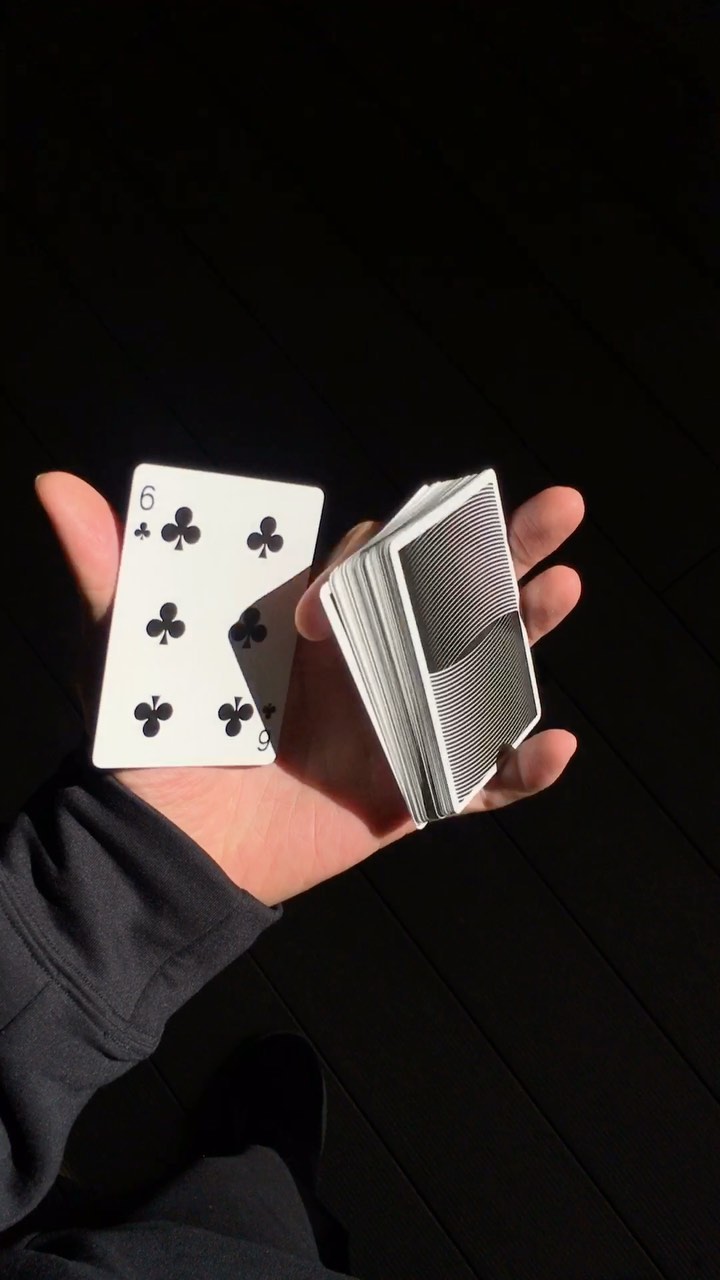
Prism is a modern classic flourish that involves constructing a complex card structure and rotating it around its own axis. The move is highly versatile, allowing for a wide variety of performances. Currently, the record for the highest number of layers constructed is 12, held by Hans Lankamp. Mechanics There are two ways to prepare the structure for spinning: no-cut method – the easiest and least demanding approach. Cards are drawn into the hand to form a triangle, after which packets are placed on the top and bottom. This method is especially useful for larger Prisms. cut method – separate the top packet and position it between the index and middle fingers (for example, using a Revolution Cut). Next, separate a larger group of cards from the thumb packet using the middle and little fingers. Then slide the ring finger beneath the newly formed packet to take another group of cards from the thumb packet. Finally, take a small group of cards from the outermost packet and place it beneath the structure to complete the base. At this stage, the structure should be stable enough to support itself on your hand or another flat surface. Once you are confident that the structure is stable, place the thumbnail at the center of the bottom packet and the index fingernail of the opposite hand at the center of the top packet. To initiate the spin, use the ring finger of the first hand. The rotation is then maintained by making a smooth circular motion with the wrist or the entire arm. A slight offset from the center of the thumbnail or index fingernail may help maintain a smoother rotation. Once the rotation has stopped, the structure can be presented in the most display view. Remove the opposite hand, slide the thumb out of the structure while keeping it extended, and present the completed construction on an open palm. Variations Variations differ in the shape of the structure, the number of layered structures, or the ability to perform two independent Prisms simultaneously. The most common shape-related variations include: A rhombus. An M-shaped Prism (referred to by the creator as "prisM"). A tower made of permanently bent cards arranged in an alternating pattern (known as "Prismeme"). References Instagram, Hans doing the record-breaking Prism https://www.instagram.com/p/DXUgi-5DKZk/ (0:41 to the end) https://www.reddit.com/r/cardistry/comments/1cojhrk/a_few_fun_prism_variations/ (0:17 to 0:31) https://www.reddit.com/r/cardistry/comments/1cojhrk/a_few_fun_prism_variations/ Instagram story on Andrew's official account (fourth slide): https://www.instagram.com/stories/highlights/17943856048346310/ Andrew's Instagram story (second slide): https://www.instagram.com/stories/highlights/17943856048346310/


Padiddle is more of a concept than a move. It is very tough to learn because it is not something you can sit down and do slowly - it's all about trial and error. But once you have gotten it down, it's like riding a bike. It will be build into your muscle memory. Special credit to Jerry Cestkowski who published this in his book "Encyclopedia of Playing Card Flourishes" in 2002.

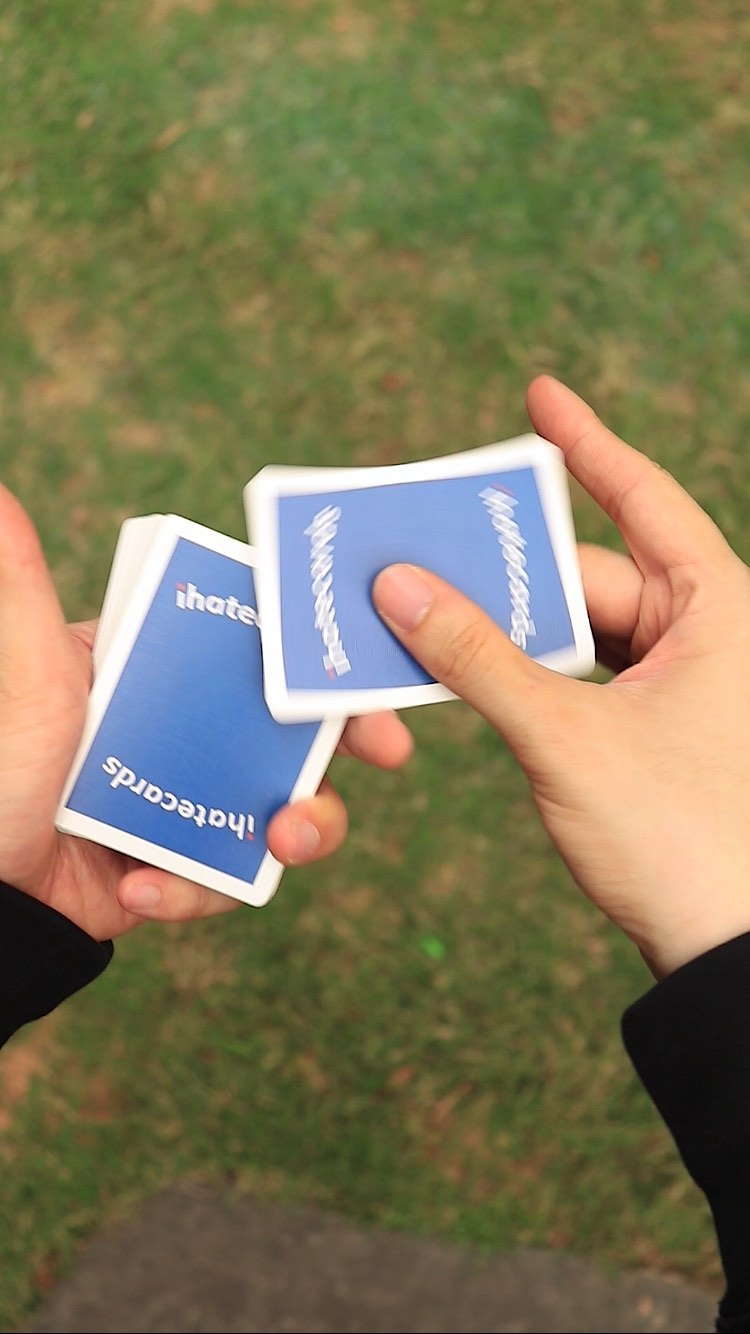
A classic move in which you spin a packet of cards between your two hands. It was first featured in "Hit the road" by Paul Wilson and Lee Asher. One source stated that the author of the move is Ashford Knietel.

A move where a card or packet spins around one of its corners using finger pressure.
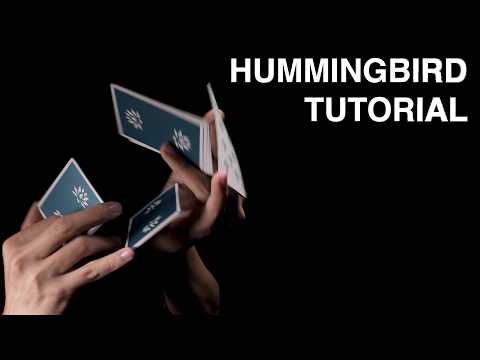
Created Flutter first in 2020. For quite some time it was just a one-hand combo move. But then I realized it had to be part of a four packet spinny move and spent the next 3 years figuring out how to make that happen. While I don't know how to do Mockingbird or Nimbus the structure of Hummingbird is very much inspired by those two moves. Had 90% of the structure decided by 2022 and after a lot of iterating settled on the current iteration in 2024. I hope to be able to do it with a full deck some day. We'll see if I ever figure that out.

The title is a reference to 3 spin cuts: Sick and Twisted, Wings of the Butterfly, and Mockingbird. The move is inspired by Daren's Sora and was first published in 2008 (?).