A list of moves that can be incorporated into combos.
7 moves · in order

Originally, the Charlier Cut was developed as a secret maneuver for controlling cards (known as the Charlier Pass). Today, it is primarily performed as a visual display of skill (a flourish) or used to openly control cards.

The Scissor Cut is a fundamental one-handed cut in which the deck is divided into two packets and opened outward like a pair of scissors. The move is a building block for many classic two-handed packet cuts like Squeeze by Daren Yeow or Barolo 2 by Nikolaj Pedersen.

The Revolution Cut is a one-handed cut in which a packet is lifted, rotated around the lower packet, and closed back into the hand, creating a clean revolving motion.

This move was created by Brian Tudor.


Pincho is a minimalistic one-packet twirl created by Oliver Sogard. A small pack of cards is clipped between two fingers and then rotated - seemingly without any effort - around the index. The simple nature of this move allows you to add your own personal style and is why many cardists consider Pincho to be one of the best combo moves out there.
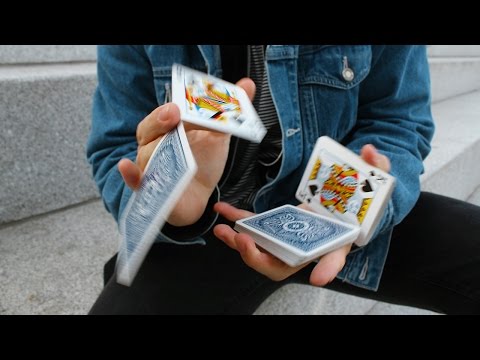
In order to understand and appreciate the art of cardistry combos, one must gather knowledge of as many moves as possible. Simplicity and practicality plays an important role when you're combining and/or improvising. Through the years, we've come across many different utility moves with different appearance and levels of simplicity. One we always come back to is Legolove by Nikolaj Pedersen. It is based off the classic Molecule rotation using the corners, and was first taught in the "Dynamite" tutorial series from 2011. It has become a part of our cardistry subconscious, and is a must-learn for every modern cardist. Sit back, grab a pack of cards, and learn Nikolaj's Legolove.
