
Harper is a furry
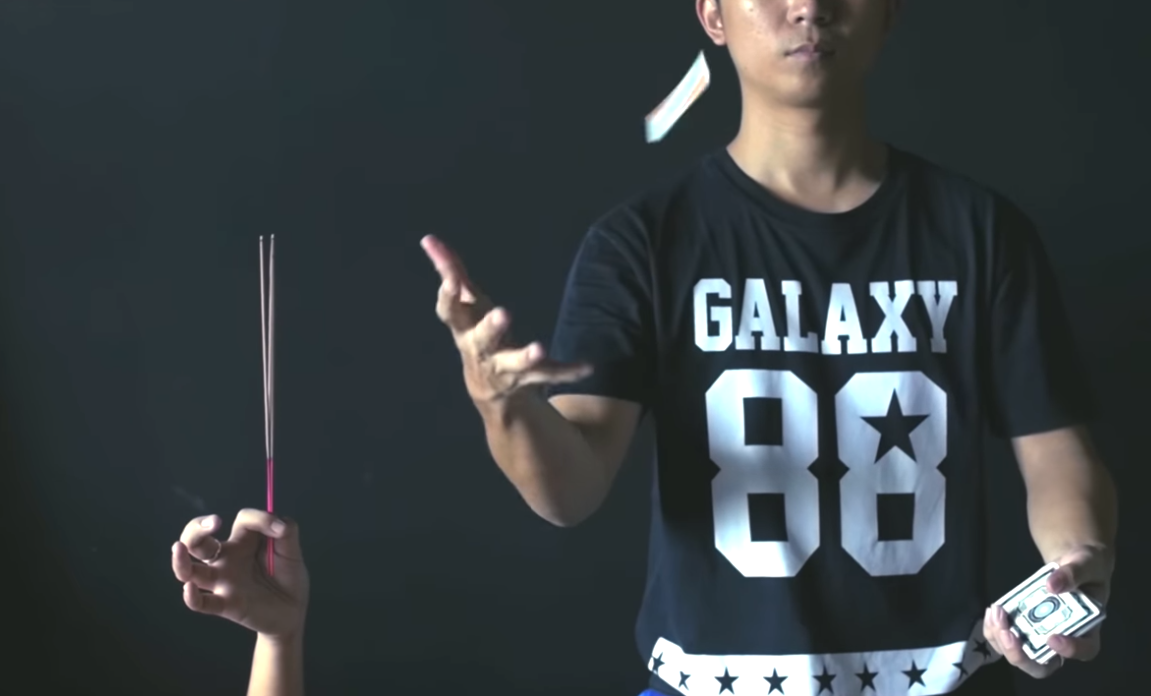
Fuck Physics is a move in which a packet of cards is tossed upward and returns to the hand at an unnatural angle. It consists of a simple cut that prepares a separated packet for the throw. The packet is then tossed in a specific way, causing it to return diagonally instead of following the expected perpendicular downward trajectory. A paid tutorial was announced for release on the NDO website in 2016, but the announcement was later cancelled as an April Fools' joke.
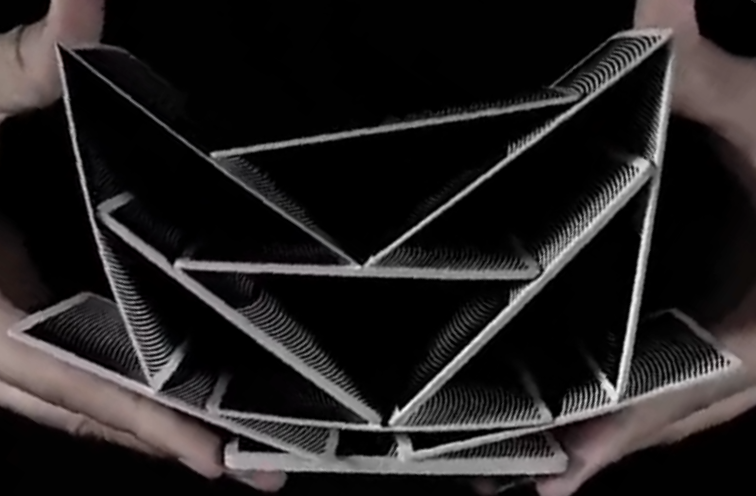
Array is a stately card construction built using principles similar to those of Holy Grail. Blocks of cards are pushed out from the deck and then pushed back into it. The entire structure is raised to a spectacular level through the thumbs and its final form is achieved by releasing the fingers holding the lower packets.
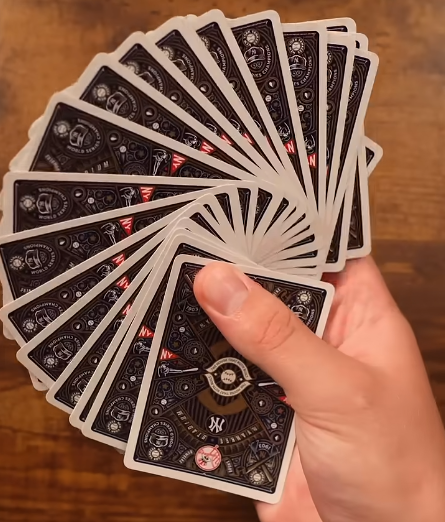
Indice Fan is a simple one-handed fan in which the cards are spread primarily using the index finger. It begins from a dealer grip, with the index finger curled underneath the deck. The cards are spread with a single fluid motion by extending the index finger while applying pressure to the deck with the index finger and thumb. For a more even spread, the remaining fingers can also push the rest of the cards during this stage.

Vad Fan is a fan which creates two fans simultaneously with the cards sliding on the thumb and middle finger of the opposite hand. Mechanics To prepare for the Vad Fan, the cards are interlaced using a Faro Shuffle and the packets are arranged in an inverted "V" shape, similarly to a Cascade. The packets are typically held at an angle between 90 and 180 degrees. For people with smaller hands, it is also acceptable to reduce the angle slightly below 90 degrees or slide the cards slightly inward. The little finger is then placed on the short edge, while the ring finger and thumb grip the outermost corners. The middle and index fingers may rest along the long edge. The cards are gradually compressed while being supported by the thumbnail and the index or middle fingernail of the opposite hand in the lower central area of the cards. The pressure is then slowly released, forming two fans at the same time. No established ending for the move has been developed yet. History Karlsson first published the move in a cardists' meetup video titled Cha-cha-cha on his YouTube channel. He officially presented the move at the second Cardistry-Con on April 10, 2015.

Side Pressure Fan is a rare pressure-based alternative to the Thumb Fan. The cards are spread by applying pressure to their short edges, using a technique inspired by the LePaul Spread.

Rotation Isolation was created as a complement to the Palm Shift Isolation. The move begins by gripping the center of the card with the thumb and middle finger, which serve as the pivot point. The ring finger is then placed against the card to rotate it in the opposite direction of the hand's movement, creating the illusion of a stationary card.

Palm Shift Isolation is a simple, fundamental isolation flourish that marked the beginning of isolation-based flourishes. A single card is held by its long edge with the fingers while the thumb slides it across the palm. The wrist is then rotated, allowing the fingers to regrip the card along its long edge and return to the starting position, ready to repeat the motion.

Super Fan is a fan in which interlaced cards slowly expand into a circular display under tension. Mechanics The cards are positioned similarly to a Cascade, forming a "V" shape. The interlaced section is supported with the other hand, while the thumb and middle finger grip the outer ends and bring them together. When the hand is moved away, the stored pressure causes the cards to rotate around pivot point, creating the characteristic fan. Variations So far, only one variation is known: A fully one-handed version, including the interlacing and tensioning of the cards. References Nanh Kiem, https://www.instagram.com/p/BVXNG82gt4n/

Table Spread Shuffle is a shuffling technique performed by spreading the cards across a flat surface. The cards are first spread out, then the outer corner of the leading cards is lifted to bring them upright. This motion pulls the remaining cards along, creating a self-standing structure of cards. The hands are released from the final cards, allowing them to fall gradually and smoothly, creating a domino-like effect. The move is often finished with a Cascade using the collected, still-interlaced cards.

One-Handed Table Shuffle is a technique that combines elements of both riffle and faro shuffling. Two aligned halves of the deck are placed close together at an angle. The index finger is then positioned at the point where the corners meet, lifting the packets upward while the remaining fingers press them together from the sides, allowing the cards to interlace.

Butt Shuffle is a variation of the Table Faro Shuffle that is performed in reverse. It's a version, where the bottom of the cards touches the surface and the interlacing occurs from bottom to top. Its main purpose is to imitate a Table Riffle Shuffle, creating the optical illusion of a standard table riffle, while in reality the cards interlace one-to-one.
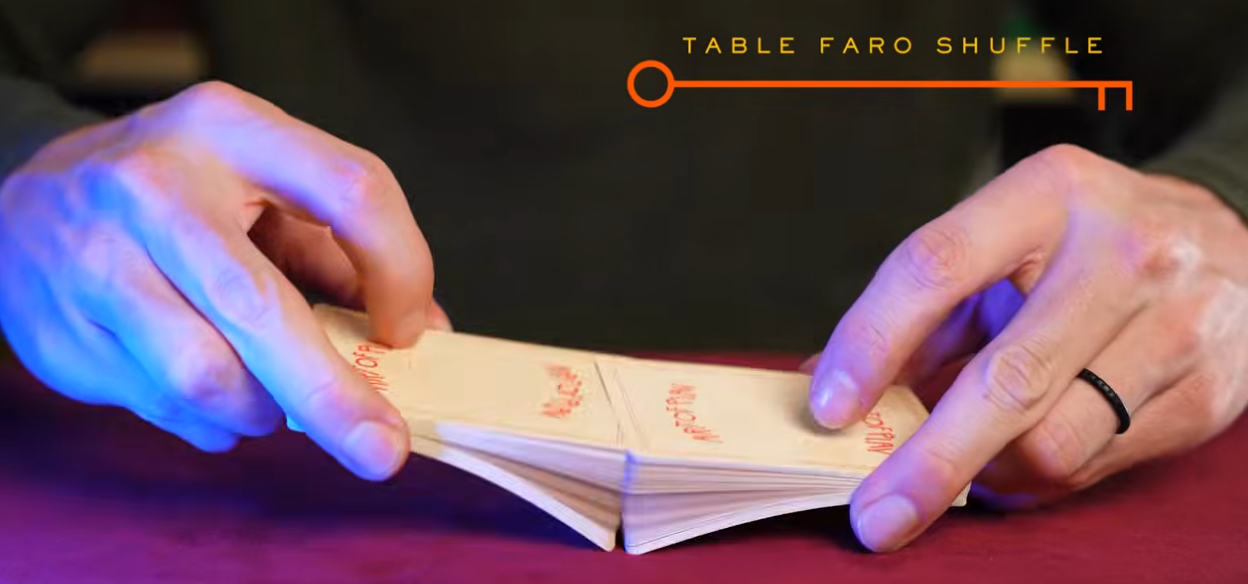
Table Faro Shuffle is a variation of the Faro Shuffle that perfectly interlaces cards on a flat surface. The technique is performed from top to bottom and only the edge of the cards touches the table
