21 moves
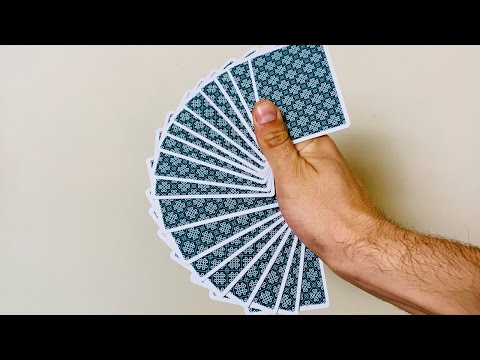
A beautiful one-handed fan. Can also be done with both hands.

A thumb fan is a classic card flourish and magic technique used to spread a deck of playing cards into an even, beautiful semi-circle. It is used by magicians to let spectators select a card, and by cardists as a visual display of skill.

A simple one-card twirl, popularized by Jeff McBride in his The Art of Card Manipulation series.

Giant Fan is a variation of the thumb fan that uses interlaced cards to create a larger fan. A popular variation is to significantly rotate the top packet inward before performing the fan. References the variation's presentation, Youtube Short, https://youtube.com/shorts/B1mbZbHqwfM?si=1lJ4b5ddkx8qawmu

Cascade is one of the classic card drops. Interlaced cards are released freely, creating a waterfall-like effect, known as a cascade.

A dribble is a move where cards are released one by one from one hand into the other, creating a smooth falling stream of cards.

A shuffle where two packets are held separately and their inner corners are released so the cards interlace together, usually followed by pushing or bridging the packets into one deck.

The Swing Cut is one of the best packet cuts to introduce to beginners in both cardistry and magic.

Spring is a fundamental cardistry technique where cards are released into the air in a controlled burst, used by both cardists and magicians. It relies on diagonal pressure built within the deck and released through the thumb. The move is widely used due to its high level of control, its versatility in use (it's required for e.g. LePaul Spread, Pressure Fan, Under Pressure Fan, and Antifaro), and its relatively low difficulty.
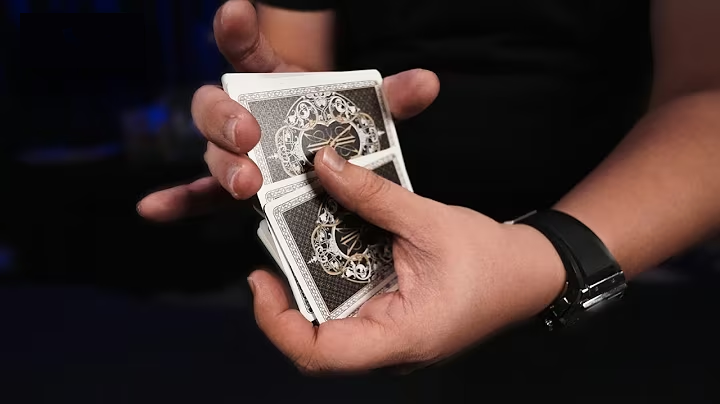
Overhand Shuffle is one of the easiest and most common ways to shuffle a pack of cards. It's a great shuffle for magicians to use since lay people are already familiar with it, and because there are some great controls and false shuffles that can be done while shuffling the deck in this manner. The shuffle is commonly used in western countries. References The description above is adapted from the 52Kards video, https://www.youtube.com/watch?v=A0J_487VquE

Table Riffle Shuffle is a professional, efficient card shuffling technique widely used in magic, casinos, and competitive card games. It is performed on a table surface by riffling the long edges of the cards. Unlike the standard Riffle Shuffle, this method is less prone to exposing cards to players, making the shuffle more discreet.

A precise shuffle where two equal packets are woven together card-for-card, creating a perfectly interlaced deck. In cardistry, faro is often used as a technique for setting up or enabling moves, especially displays, weaves, and packet-based sequences.
No comments yet.
