

The Birth of Ora Cascade The day started like any other until The Virts dropped their first Instagram video featuring the Virtuoso Launch Edition deck. Daren Yeow unveiled Waterwheel for the first time, and the cardistry world lit up. The move was hypnotic and instantly iconic. I was completely hooked. But I was also frustrated. No matter how hard I tried, I couldn’t nail the perfect one-handed faro Waterwheel demanded. After weeks of grinding, I finally decided to take a break from forcing it. In that downtime, I sat back and started thinking about creating something comfier and easier for myself. That’s when I decided to experiment from a regular cascade position, where a normal faro felt natural and controllable. Out of that session came what I originally called Orakusa. The move originally featured a “bloom” phase where the cards opened up beautifully before cascading down. I eventually removed the bloom because it shortened the cascade too much and hurt the overall flow. Over time, most people started calling it Ora. I completely forgot the original meaning behind “Orakusa” (it was that long ago), so I just rolled with it and quietly shortened the name to Ora Cascade. What began as a workaround for Waterwheel became one of my signature moves. A reminder that sometimes the best creations come from adapting to your current limits instead of stretching for perfection. - Zomb Tien

Buzzsaw is a move that mimics the movements of a spinning circular saw blade. Its smooth, continuous motion creates a satisfying visual flow that perfectly matches its name. It is typically recommended to perform Buzzsaw with a borderless deck for better visual effects. The name was coined by Kevin Ho.

According to Leon Tai's knowledge, the move was first published on a forum called Singapore Magic Circle in 2005. Back then, Mockingbird was fairly simple compared to the full version we see today. It can be seen as a combination of the corner spin from Molecule 3 by Dan and Dave and the Tornado Cut. In Twisted Reality (2006), the flow improved significantly, and Daren stopped midway through the move to showcase the "3-packet display", making the flourish feel more complete. Three months later, an extended version of Mockingbird was released, but it was not until 2008 that Daren published the full version of the move, featuring the stunning display known as Twist of Fate. Nowadays, we often see people perform only the first phase of Mockingbird, and this iconic flourish becomes even more impressive when executed at high speed. This description is a short summary of Leon Tai's in-depth video essay on Mockingbird which is shown above.

Stands for "Kevin's First Cut". A very fun and easy flourish to get started with packet cuts.

At Cardistry World 2026, Samuel shared that a Scam School video on how to drop a card inspired him to create Destiny.

This move was nominated for the Move of the year 2026 award. It features two cards being launched from the deck and being catched by the cardist.
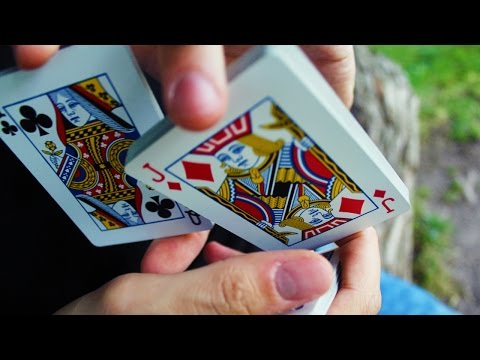
Transfix is one of Oliver's most classic flourishes. It's a combination of two simple three-packet cuts, each of which can be performed on their own. A packet rotates out of the deck to create an arrow-formation before closing with a seemingly chaotic movement of packets. A special four-packet version by Tobias is also explained in the tutorial.

Canvas by Nikolaj Pedersen is a clean three-packet cut with new and very distinct mechanics. Attention to simplicity and movement leaves you - the performer - more room for interpretation than usual. It is a fresh canvas waiting for you to paint with your personal brush.

Although this is one of Tobias' oldest flourishes, it's also one of his most popular and requested. Phaced is a variation of Joey Burton's Skater Cut. In this tutorial you will hear how this move was created and get an in-depth walkthrough of the mechanics.


Based on a move by Dan Buck called Swirly,

The famous Sybil cut in cardistry was created by the magician and author Chris Kenner. It was first published in his 1992 book, Totally Out of Control, under the specific name the "Five Faces of Sybil".
