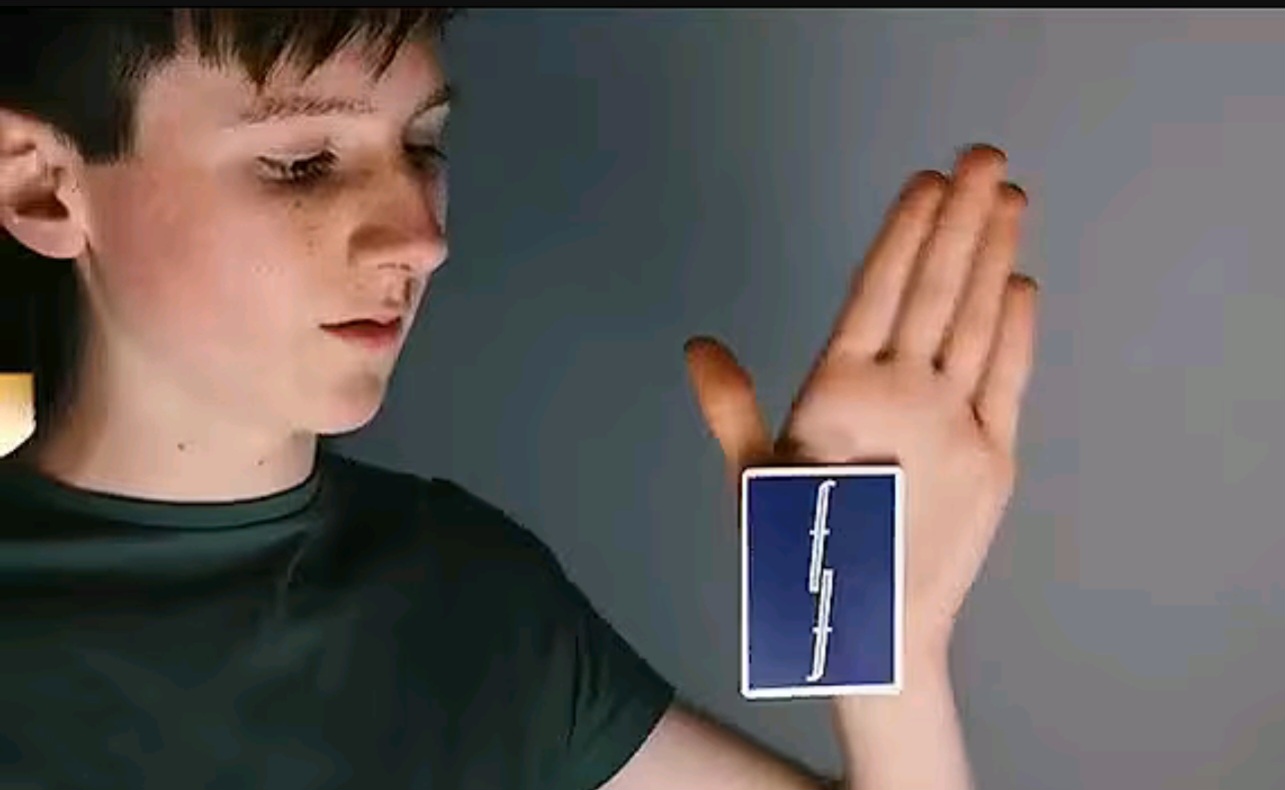
Tiny Hands is a visual illusion in which a single card is placed against the performer’s palm and gently pushed outward, creating the appearance that the card is floating just above the hand. The effect is typically enhanced by rotating the hand during the display, further reinforcing the illusion of suspension. important For Tiny Hands to function correctly, the performer’s palm must retain a slight amount of moisture to allow the card to adhere subtly to the skin. The creator explains this directly, stating that “to perform Tiny Hands, I use the moisture on the inside of the bottom of my lip.”
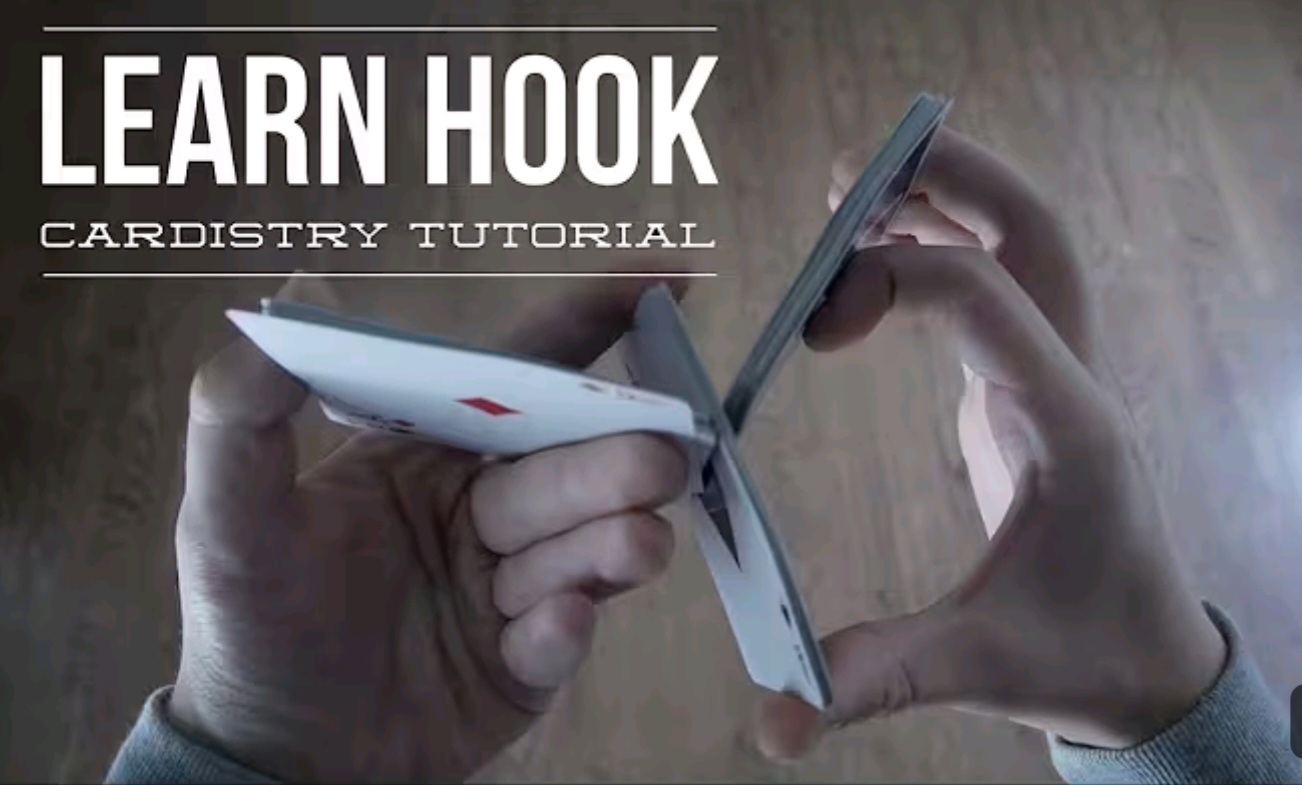
Hook is a three‑packet cut distinguished by a sharp, hook‑like visual that occurs at the midpoint of the flourish. History Zach Mueller noted in the description of his tutorial, regarding the history of the move: This flourish was heavily inspired by Tobias and Oliver - when they stayed at my house in April, I really got into 3 packet cuts. There's a certain aesthetic to a cut with only 3 packets throughout the flourish that I really love. Tobias describes these as feeling more 'premium', and I would have to agree. There's something nice about 3 packets which move around each other without any additional packets being broken off, or single cards just randomly extending off of a packet. Transfix and Tailormade specifically were two I was very inspired by, and I was determined to make my own 3 packet cut. This was the result! The beginning is very inspired by and reminiscent of Michael James' Collector, which you can learn on his DVD, Solo. The ending is inspired by Borolo 2 by Nikolaj, which you can buy in his B-Bundle download on dananddave.com.

A fascinating 8-card display with 2 symmetrical sides, performed by both hands at the same time and joined to create a visual at the meeting point. History He started working on the move on June 12, 2019. The flourish began as a simple three‑card production, built around clean visual reveals. As Mayrand continued refining the concept, he discovered a method to add a fourth card, expanding the structure and symmetry of the move. Later, the move reached its iconic final form when he found a way to double the production in both hands, creating the mirrored 8‑shape visual that defines Crazy 8's today. Lars Mayrand provided clarification on the history of the move, stating that: i published it on june 12 2019. it started as just a three card production, then i found a way to add the fourth card, and later double it in both hands. The final form was performed for the first time in his Youtube video Going Green.
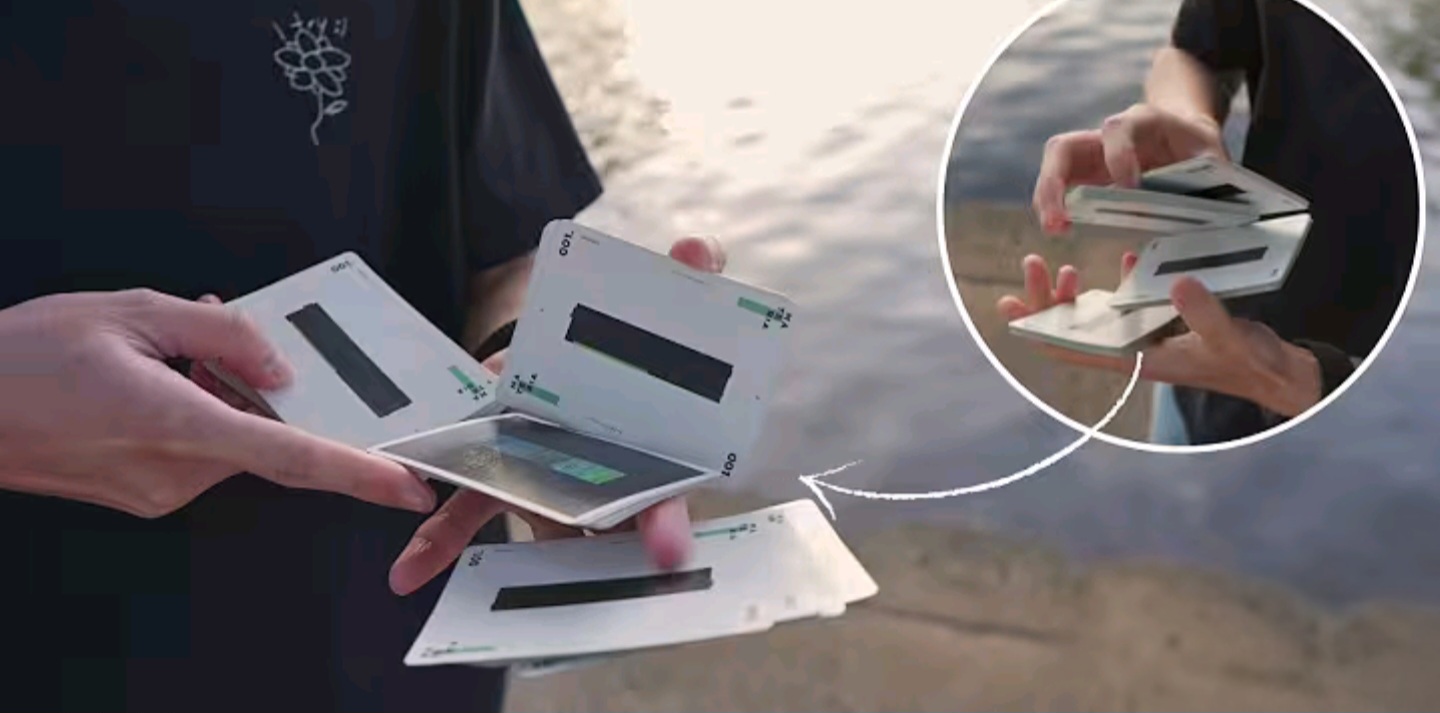
A move with an almost dreamy, half-surreal vibe. The move follows simpler mechanics that then lead into more complicated sequence. Backstory Both Cornobble and Are There Turtles in the pond share a common opener, with Cornobble generally understood to have been developed after Turtles in the Pond. The shared opener is based on Revolver by Kevin Ho. According to Cardistree, work on this opener began around spring 2024, and the first fully completed version of Are There Turtles in the Pond—the precursor to Cornobble—was finished in June 2024. The names Are There Turtles in the Pond and Cornobble originate from a Youtube video A (non)cardist's deck collection. In that video, Cardistree asks a friend what the flourish should be called. She jokingly suggested "Are There Turtles in the Pond", a phrase Cardistree describes as "a running joke between them". In the same video, she also proposed "Cornobble", a term meaning to slap someone across the face with a dead fish. Cardistree explains that he spent some time deciding between the two names. Eventually, around October 2025, he chose to use both. At that time, what is now Are There Turtles in the Pond was originally named Cornobble. However, after realizing the name didn’t suit the move, he redesigned Are There Turtles in the Pond to include a “slap‑like” closer that better matched the meaning of the word cornobble. Tutorials for both Are There Turtles in the Pond and Cornobble were released around March 2026. important: the tutorial teaches both cornobble and its variation turtles in the pond
